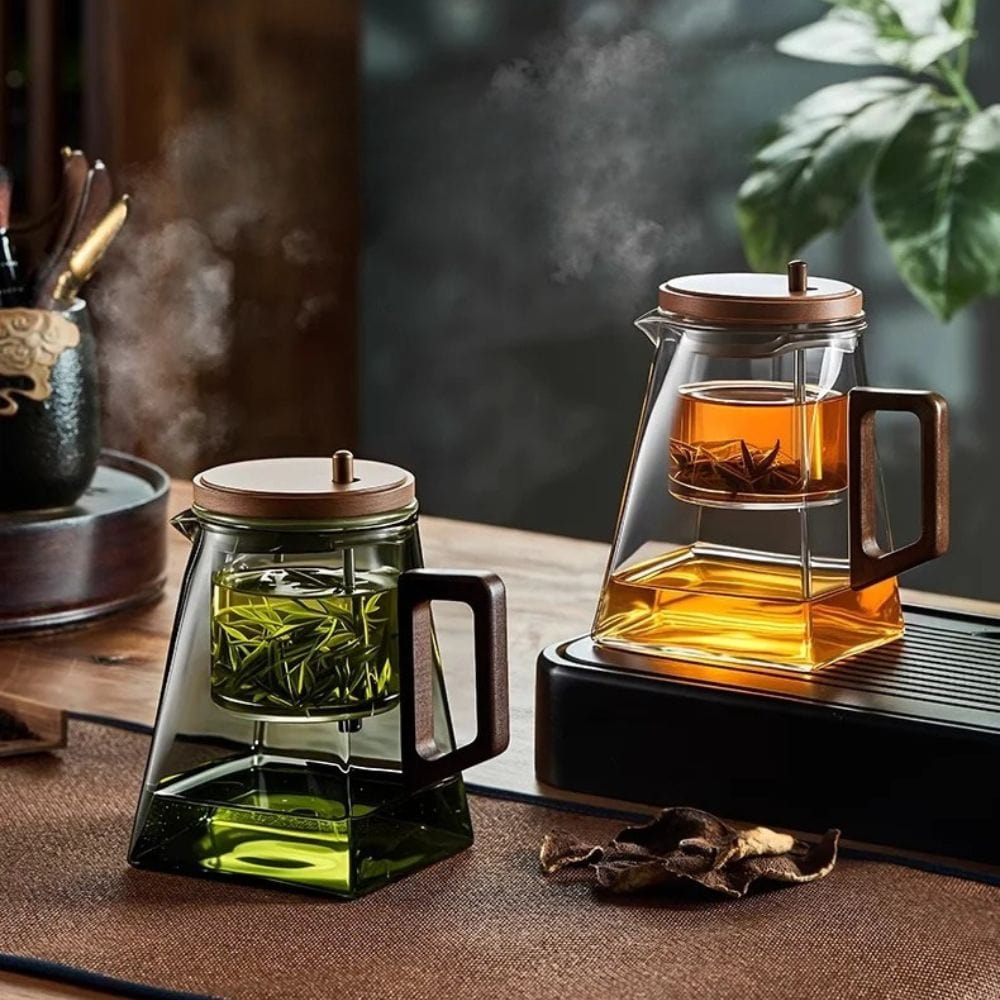


Caffeine and Theine in Tea: The Complete Guide
Introduction: Caffeine or Theine?
It's one of the most common questions about tea: "Does tea contain caffeine?" and "What's the difference between caffeine and theine?" The answer might surprise you: caffeine and theine are exactly the same molecule! But the effect on your body can be very different...
Discover everything you need to know about caffeine in tea: quantities by tea type, comparison with coffee, effects on the body, and tips for managing your consumption. ☕🍵

-30% automatic by clicking below
300ml • Removable filter • Perfect dosage 🔬
📖 Summary
1. Caffeine and Theine: The Same Molecule
Let's start by demystifying a big misunderstanding:
🧪 Spoiler: Caffeine = Theine
Caffeine and theine are exactly the same chemical molecule (C₈H₁₀N₄O₂). The term "theine" was invented in the 19th century when it was thought that a different substance had been discovered in tea. Today, scientists only use the term "caffeine," regardless of the source (tea, coffee, chocolate, guarana...).
📜 A Bit of History
- 1819: Friedlieb Runge isolates caffeine from coffee
- 1827: Oudry isolates a substance from tea which he names "theine"
- 1838: It is discovered that caffeine and theine are identical
- Today: Only the term "caffeine" is used scientifically
The term "theine" persists in common language, but it is indeed caffeine!
🔬 The Caffeine Molecule
- Formula: C₈H₁₀N₄O₂
- Family: Methylxanthine (alkaloid)
- Molar mass: 194.19 g/mol
- Action: Central nervous system stimulant
- Half-life: 3-5 hours in the body
💡 So Why Do People Say Tea "Awakens" Differently?
The molecule is identical, but the experience is different! This is due to other compounds present in tea (especially L-theanine) and how caffeine is absorbed. We will discuss this in detail in the section on effects.
2. Tea vs Coffee: The Great Comparison
Here's the comparison everyone's been waiting for:
Espresso Coffee
Per 30ml cup
Filter Coffee
Per 240ml cup
Black Tea
Per 240ml cup
Green Tea
Per 240ml cup
Matcha
Per 2g serving
Herbal Tea
Caffeine-free
| Drink | Serving | Caffeine | vs Coffee |
|---|---|---|---|
| Espresso Coffee | 30 ml | 63 mg | Reference |
| Filter Coffee | 240 ml | 95 mg | Reference |
| Strong Black Tea | 240 ml | 50-70 mg | ~50-75% |
| Light Black Tea | 240 ml | 40-50 mg | ~40-50% |
| Matcha | 2g / 240ml | 35-70 mg | ~40-75% |
| Green Tea | 240 ml | 20-45 mg | ~25-50% |
| Oolong Tea | 240 ml | 30-50 mg | ~30-50% |
| White Tea | 240 ml | 15-30 mg | ~15-30% |
| Coca-Cola | 330 ml | 32 mg | ~35% |
| Dark Chocolate | 30g | 20-25 mg | ~25% |
| Herbal Teas / Rooibos | 240 ml | 0 mg | 0% |
💡 The Key Takeaway
On average, a cup of tea contains 2 to 3 times less caffeine than a cup of coffee. But beware: these figures are averages! The actual content varies greatly depending on the type of tea, preparation, and infusion.
3. Caffeine Content by Tea Type
Not all teas are equal when it comes to caffeine:
☕ Black Tea
The most caffeinated. Complete oxidation releases more caffeine.
🍂 Pu-erh
Varies with age. Old pu-erh = less caffeine.
🌀 Oolong
Semi-oxidized. Between green and black.
🍃 Green Tea
Unoxidized. Moderate but variable content.
⚪ White Tea
Minimal processing. Often the least caffeinated.
☕ Black Teas: The Most Caffeinated
- Assam: 50-90 mg – robust and full-bodied
- Earl Grey: 40-70 mg – black tea base
- English Breakfast: 40-70 mg – classic blend
- Darjeeling: 40-60 mg – lighter
- Lapsang Souchong: 40-60 mg – smoky
Caffeine Level: HIGH
🍃 Green Teas: Moderate Content
- Gyokuro: 35-50 mg – shaded, more caffeine
- Matcha: 35-70 mg – whole leaf consumed
- Sencha: 20-40 mg – Japanese standard
- Genmaicha: 15-30 mg – diluted by rice
- Longjing: 20-35 mg – Chinese green tea
Caffeine Level: MODERATE
🌀 Oolongs: In-Between
- Tie Guan Yin: 30-50 mg – light
- Da Hong Pao: 35-55 mg – roasted
- Dong Ding: 30-45 mg – Taiwanese
- Oriental Beauty: 35-50 mg – oxidized
Caffeine Level: MODERATE
⚪ White Teas: The Lightest
- Bai Hao Yin Zhen: 15-25 mg – silver needles
- Bai Mu Dan: 20-30 mg – white peony
- Shou Mei: 20-35 mg – more mature
Caffeine Level: LOW
⚠️ Beware of Misconceptions
Contrary to popular belief, white tea is not always the least caffeinated. Some white teas (pure buds) can contain as much caffeine as green teas. The content depends on many factors, not just the color!

-30% automatic by clicking below
6 pieces • Teapot + cups • Complete 🍵
4. Factors Influencing Content
Caffeine content varies greatly depending on several factors:
🌱 Plant-Related Factors
- Variety: Camellia sinensis var. assamica contains more caffeine than var. sinensis
- Part of the plant: Buds > young leaves > old leaves
- Harvest season: First harvest (spring) = more caffeine
- Altitude: High altitude = slow growth = less caffeine
- Shading: Shaded teas (Gyokuro, Matcha) have MORE caffeine
🫖 Preparation Factors
- Water temperature: Hotter = more caffeine extraction
- Steeping time: Longer = more caffeine (but also more bitterness)
- Quantity of tea: More leaves = more caffeine
- Leaf size: Broken leaves (tea bags) release their caffeine faster
- Number of infusions: 1st infusion = 50-60% of total caffeine
| Factor | ↑ More Caffeine | ↓ Less Caffeine |
|---|---|---|
| Temperature | 100°C (boiling water) | 60-70°C (warm water) |
| Time | 5+ minutes | 1-2 minutes |
| Leaves | Broken / Tea bags | Whole / Loose leaf |
| Part | Buds | Old leaves |
| Infusion | 1st infusion | 3rd+ infusion |
| Cultivation | Shaded (Gyokuro) | Full sun |
💡 Tip: Reduce Caffeine by Adjusting Preparation
To reduce caffeine in your tea: use cooler water (70-80°C instead of 100°C), steep for less time (2 min instead of 5), and prefer whole leaves over tea bags. See our guide on infusion temperature.
5. Effects on the Body
Why does tea "awaken" differently from coffee despite having the same caffeine molecule?
🧠 The Effect of L-Theanine
Tea contains a unique amino acid: L-theanine. This molecule:
- Promotes relaxation without drowsiness
- Modulates the effect of caffeine – gentler and more stable energy
- Improves concentration and creativity
- Reduces potential anxiety from caffeine
It is this caffeine + L-theanine synergy that gives tea its "alert but calm" effect.
☕ Coffee Effect
Rapid peak, possible crash, can cause nervousness and palpitations.
🍵 Tea Effect
Gradual rise, stable energy, calm concentration.
✅ Benefits of Caffeine (in moderate doses)
- Alertness: Increases attention and concentration
- Performance: Improves physical and cognitive abilities
- Mood: Mild antidepressant effect
- Metabolism: Slight increase in energy expenditure
- Neuroprotection: Associated with reduced risk of Parkinson's and Alzheimer's
⚠️ Undesirable Effects (at high doses or sensitivity)
- Insomnia: Avoid caffeinated tea after 4 pm if sensitive
- Anxiety: Nervousness, restlessness in sensitive individuals
- Palpitations: Accelerated heart rate
- Digestive issues: Stomach irritation
- Dependence: Headaches if stopped abruptly
| Daily Dose | Effect | Equivalent |
|---|---|---|
| 0-100 mg | Mild alertness, safe for everyone | ~2-3 cups of green tea |
| 100-200 mg | Good alertness, common dose | ~3-5 cups of tea |
| 200-400 mg | Max recommended dose (healthy adult) | ~5-8 cups of black tea |
| 400+ mg | Risk of undesirable effects | Caution! |
⚠️ Sensitive Populations
Pregnant women: Max 200 mg/day recommended. Children: Limit caffeine. Anxious individuals: Prefer low-caffeine or caffeine-free teas. Heart problems: Consult a doctor.
6. How to Reduce Caffeine
If you want to enjoy tea while limiting caffeine:
🫖 Preparation Techniques
- Cooler water: 70°C instead of 100°C (-20% caffeine)
- Short infusion: 1-2 min instead of 5 min
- Discard the 1st infusion: Steep for 30 seconds then discard – removes 50% of caffeine
- Re-infusions: 2nd and 3rd infusions contain less caffeine
- Less leaves: Reduce the quantity of tea
🍃 Choose the Right Teas
- Prefer: White teas, Genmaicha, Hojicha (roasted), Kukicha (twigs)
- Avoid: Assam, Matcha, Gyokuro, CTC tea bags
- Re-infuse: Use teas that support multiple infusions
- Time: Caffeinated teas in the morning, light teas in the afternoon
💡 The Myth of "Caffeine Rinse"
Beware of the myth that 30 seconds of infusion removes all caffeine! In reality, this technique removes about 30-50% of the caffeine, not 100%. It's useful, but not a miracle solution. For truly caffeine-free, opt for decaffeinated teas or herbal teas.
7. Caffeine-Free Alternatives
For evenings or if you are sensitive to caffeine:
🌿 Herbal Teas and Infusions (0% caffeine)
🍂 Decaffeinated Teas
Decaffeinated teas are not completely caffeine-free – they generally contain 2-5 mg per cup (vs 40-70 mg normally).
- CO2 method: The most natural, preserves aromas
- Water method: Uses water, fewer chemicals
- Solvent method: Effective but can alter taste
If you are very sensitive, prefer herbal teas (0 caffeine) over decaffeinated teas.
🌿 Naturally Low-Caffeine Teas
- Hojicha: Roasted Japanese green tea – ~7-15 mg (very low)
- Kukicha: Japanese twig tea – ~15-20 mg
- Bancha: Late-harvest green tea – ~15-25 mg
- Genmaicha: Green tea + roasted rice – ~15-30 mg (diluted)

-30% automatic by clicking below
350ml • Large capacity • Evening infusions 🌙
8. Frequently Asked Questions
❓ Does green tea have less caffeine than black tea?
Generally yes, but not always! Green tea averages 20-45 mg per cup vs 40-70 mg for black. However, a Gyokuro (shaded green tea) can have as much caffeine as a light black tea. Preparation also matters greatly.
❓ Is white tea really caffeine-free?
No! That's a myth. White tea contains caffeine (15-30 mg/cup). Some bud-based white teas can even contain as much as green teas. Only herbal teas are naturally caffeine-free.
❓ How long before bed should I stop drinking tea?
Caffeine's half-life is 3-5 hours. To sleep well, stop caffeinated tea 6-8 hours before bedtime. If you are very sensitive, prefer herbal teas from the afternoon. Less sensitive people can drink tea until late afternoon.
❓ Does Matcha have more caffeine than coffee?
A standard serving of Matcha (2g) contains 35-70 mg of caffeine, vs 95 mg for a filtered coffee. So no, Matcha generally has less caffeine. But because the whole leaf is consumed, caffeine is more present than with a classic infused green tea.
❓ How do I know if I'm sensitive to caffeine?
Signs of sensitivity: difficulty sleeping after a single cup, nervousness, palpitations, anxiety, stomach upset. Sensitivity is genetic (CYP1A2 gene). If you are a "slow metabolizer," avoid caffeine after noon and prefer herbal teas or low-caffeine teas.
Conclusion: Caffeine Mastered
Caffeine in tea is neither a problem nor a reason to abstain – provided you understand it well and adapt it to your needs. With L-theanine, tea offers a gentler and more stable stimulation than coffee, perfect for daily concentration.
📝 Key Takeaways
- 🧪 Caffeine = Theine: Same molecule, different term
- ☕ Tea vs Coffee: 2-3x less caffeine in tea
- 🍵 Ranking: Black > Oolong > Green > White (generally)
- 🧠 L-Theanine: Modulates caffeine effect = calm alertness
- ⏱️ Reduce: Cooler water, short infusion, re-infusions
- 🌿 Caffeine-free: Herbal teas, Rooibos, Hojicha
- 🌙 Evening: Stop caffeinated tea 6-8 hours before bed
Also discover our guides on green tea, black tea, herbal tea and Rooibos.
Enjoy your tea with full knowledge! 🍵☕✨
🍵 Discover Our Tea Accessories
Cups, teapots, infusers... Everything you need to perfectly dose your tea!
-30% with code BLOG30 • Free delivery
