

Darjeeling: A Complete Guide to the Champagne of Teas
Introduction: The Champagne of Teas
Darjeeling is often called the "Champagne of Teas," and not by chance. Grown on the majestic slopes of the Indian Himalayas, this exceptional tea offers unique aromas and an incomparable delicacy that make it one of the most prestigious teas in the world.
From gardens suspended between mist and sun to the cups of the greatest connoisseurs, discover the secrets of this legendary tea. 🏔️🍵

Automatic -30% by clicking below
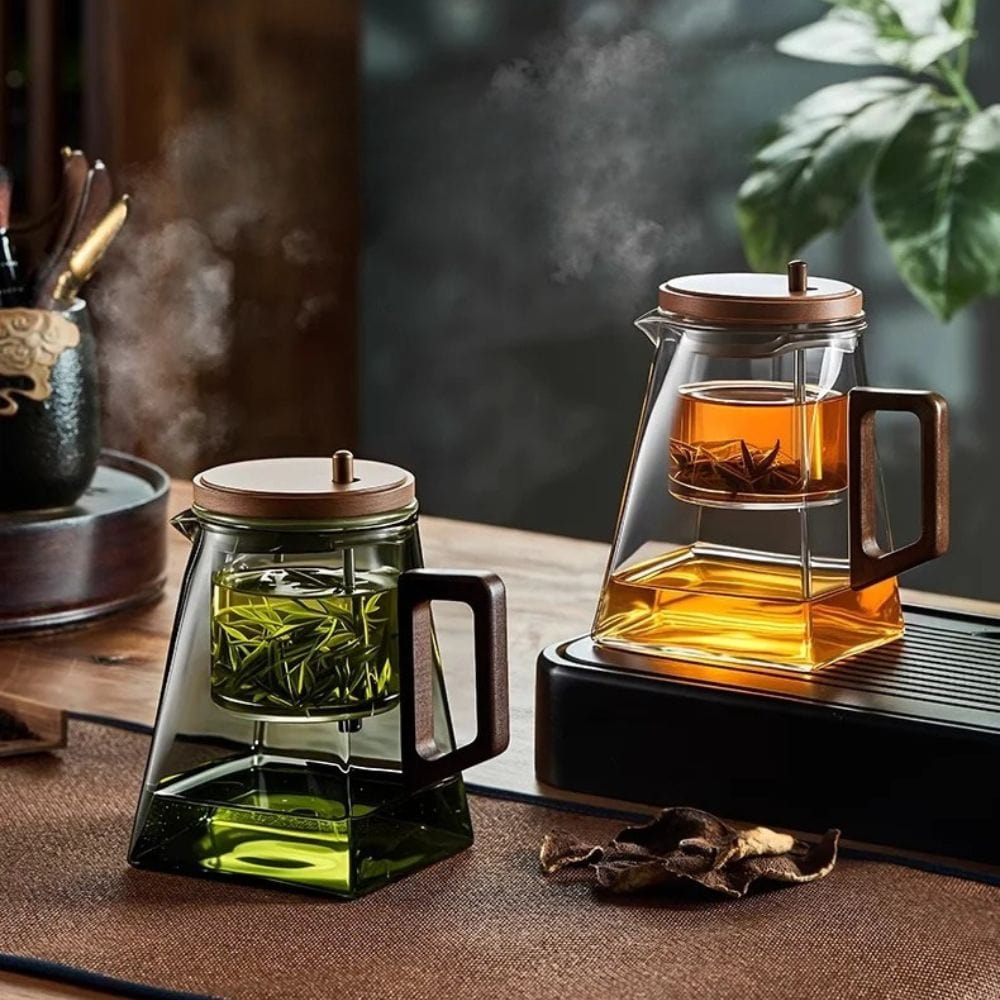
300ml • Removable filter • Perfect premium tea 🏔️
📖 Table of Contents
1. What is Darjeeling?
Darjeeling is an exceptional tea produced in a mountainous region of northeastern India, at the foot of the Himalayas.
🏔️ The Champagne of Teas
Darjeeling is a tea produced exclusively in the Darjeeling district, West Bengal (India). Like Champagne or Cognac, it benefits from a Protected Geographical Indication (PGI): only teas grown in this region can bear this name. Its unique terroir, between 600 and 2000 meters above sea level, gives it incomparable aromas, often described as "muscatel".
🏔️ Altitude
Grown between 600 and 2000m, in the Himalayan mist.
🍇 Muscatel
Unique muscat grape notes, Darjeeling's signature.
🏆 Prestige
One of the most sought-after and valued teas in the world.
🌿 Artisanal
Manual harvesting, limited and careful production.
2. The Unique Terroir
The secret of Darjeeling lies in its exceptional terroir:
🗺️ Geography
- Location: Darjeeling district, West Bengal, India
- Altitude: 600 to 2000 meters
- Area: Approximately 17,500 hectares of gardens
- Production: ~8-10 million kg/year (1% of Indian production)
- Gardens: 87 certified gardens
🌤️ Climate
A perfect microclimate for tea:
- Mist: Frequent fogs that protect from intense sun
- Rain: Monsoon from June to September
- Temperature: 10-25°C depending on the season
- Sunshine: Ideal alternation of sun/clouds
This unique combination slows down the growth of tea bushes, concentrating the aromas in the leaves.
🌱 The Cultivar
Darjeeling tea bushes are unique:
- Variety: Primarily Camellia sinensis var. sinensis (Chinese variety)
- History: Plants imported from China in the 19th century by the British
- Adaptation: These tea bushes adapted to the Himalayan altitude
- Clones: Development of local cultivars (AV2, P312, B157...)
💡 Why "Champagne of Teas"?
Like French Champagne, Darjeeling owes its unique character to its irreplaceable terroir. The altitude, climate, soil, and local expertise create a product that cannot be replicated anywhere else. Hence this prestigious appellation and geographical protection.
3. The Flushes (Harvests)
Darjeeling comes in several flushes, each with its own character:
First Flush
March-April • Fresh, floral, delicate
Second Flush
May-June • Muscatel, amber, complex
Monsoon Flush
July-Sept • Full-bodied, less subtle
Autumn Flush
Oct-Nov • Coppery, sweet, balanced
🌸 First Flush (First Harvest)
The most sought after by connoisseurs:
- Period: Mid-March to mid-April
- Character: Fresh, floral, slightly vegetal
- Color: Clear, pale yellow-green infusion
- Notes: White flowers, fresh grass, delicate astringency
- Price: The highest (limited harvest after winter)
For whom: Lovers of delicate and subtle teas.
☀️ Second Flush (Second Harvest)
The "true" Darjeeling according to many:
- Period: May to June
- Character: Muscatel, fruity, rounder
- Color: Golden to amber infusion
- Notes: Muscat grape, apricot, honey, slight astringency
- Special feature: The famous "muscatel" that gives Darjeeling its reputation
For whom: Those who want the classic Darjeeling experience.
🌧️ Monsoon Flush (Monsoon Harvest)
Less prestigious but interesting:
- Period: July to September
- Character: More full-bodied, less subtle
- Color: Darker infusion
- Use: Often used in blends
- Price: More accessible
🍂 Autumn Flush (Autumn Harvest)
The balanced alternative:
- Period: October to November
- Character: Coppery, sweet, less astringent
- Color: Amber, coppery infusion
- Notes: Nuts, dried fruits, honey
- Price: Good value for money
For whom: Those who find First Flush too light.
| Flush | Period | Character | Profile |
|---|---|---|---|
| First Flush | March-April | Delicate, floral | Light, subtle |
| Second Flush | May-June | Muscatel, fruity | Balanced, complex |
| Monsoon | July-Sept | Full-bodied | For blends |
| Autumn | Oct-Nov | Sweet, coppery | Round, accessible |

Automatic -30% by clicking below
6 pieces • Teapot + cups • Elegance 🇮🇳
4. Famous Gardens
Some gardens (estates) are particularly renowned:
🌿 Makaibari
The oldest garden (1859), a pioneer of organic and biodynamic practices. Delicate teas with a distinctive terroir.
🌿 Castleton
Legendary for its muscatel Second Flush. Among the most expensive in the world.
🌿 Margaret's Hope
Named after the daughter of a British planter. Perfect balance and fruity notes.
🌿 Jungpana
High altitude (up to 1800m), exceptional floral teas. Remarkable First Flush.
🌿 Thurbo
View of Kangchenjunga. Highly sought-after muscatel Second Flush.
💡 Read the Label
A quality Darjeeling always indicates: the garden name, the flush (harvest), the year, sometimes the lot (invoice number). If this information is missing, it is probably a lower quality blend.
⚠️ Beware of Counterfeits
It is estimated that 4 times more "Darjeeling" is sold worldwide than the region actually produces! Buy from reputable sellers and check for the official certification logo (Tea Board of India).
5. How to Prepare It
An exceptional tea deserves careful preparation:
📋 The Perfect Method
- Dosage: 2-3g of tea (1 heaped teaspoon) per 200ml cup
- Water: Fresh, filtered, heated to 85-90°C (not boiling!)
- Preheat: Rinse the teapot/cup with hot water
- Infusion: 3-4 minutes depending on the flush
- Filter: Remove the leaves to stop the infusion
- Taste: Plain, without milk or sugar, to appreciate the aromas
| Flush | Temperature | Time | Notes |
|---|---|---|---|
| First Flush | 80-85°C | 2-3 min | Very delicate, do not over-infuse |
| Second Flush | 85-90°C | 3-4 min | More tolerant, reveals the muscatel |
| Autumn Flush | 85-90°C | 3-4 min | Balanced |
⚠️ No Milk!
Unlike other Indian teas like Assam, Darjeeling is best enjoyed plain. Milk would mask its fineness and subtle aromas. It's a tea for contemplation, not a breakfast tea.
💡 Re-infusions
Quality Darjeelings can be re-infused 2-3 times. Slightly increase the brewing time with each infusion. Each steeping reveals different facets of the tea. First Flush is particularly good for gong fu (multiple short infusions).
6. Tasting and Pairings
Darjeeling is a tea for pure tasting:
🍇 Tasting Notes
Depending on the flush, you will discover:
- First Flush: White flowers, fresh grass, citrus, slight vegetal bitterness
- Second Flush: Muscat grape (the famous "muscatel"), apricot, honey, nuts
- Autumn: Dried fruits, hazelnut, coppery notes, sweetness
🍰 Food Pairings
- First Flush: Light pastries, fresh fruits, macarons
- Second Flush: Apricot tart, fruit cake, mild cheeses
- Autumn: Dry biscuits, dried fruits, milk chocolate
- Avoid: Spicy or overly sweet dishes that would overpower the subtlety
⏰ Best Time
- Afternoon: The ideal time to appreciate this meditative tea
- Tea time: Perfectly suited to British tradition
- Alone or with a small group: To focus on the aromas
- Avoid: A rushed morning or during a heavy meal
💡 A Tea for Contemplation
Darjeeling is not a tea to be drunk mechanically. Take the time to observe the color of the infusion, to smell the aromas before tasting, to let the tea evolve in your mouth. It is a complete sensory experience.

Automatic -30% by clicking below
350ml • Elegant glass • Large capacity ✨
7. Frequently Asked Questions
❓ Is Darjeeling a black tea?
Not exactly. Technically, Darjeeling is often lightly oxidized (50-70%), placing it between green tea and black tea. First Flush teas are particularly light. It is sometimes classified as "semi-oxidized tea" or "light oolong." This is why it is more delicate than other Indian black teas.
❓ First Flush or Second Flush: which to choose?
Depending on your taste: First Flush is lighter, floral, subtle – ideal if you like green or delicate teas. Second Flush is richer, muscatel, complex – perfect for discovering the "true" Darjeeling character. Start with a Second Flush if it's your first time.
❓ Why is Darjeeling so expensive?
Several reasons: 1) Limited production (~10 million kg/year vs 1 billion for Assam). 2) Manual harvesting only. 3) Unique terroir that cannot be replicated. 4) High global demand. 5) The best lots go to auction at high prices.
❓ How do I know if my Darjeeling is authentic?
Check for: 1) The Tea Board of India certification logo. 2) The specific garden name. 3) The flush and year indication. 4) A realistic price (not too low). 5) Purchase from a reputable specialized seller.
❓ What's the difference between Darjeeling and Assam?
Two very different Indian teas! Assam is a full-bodied, malty black tea, ideal with milk (the base of English Breakfast). Darjeeling is delicate, floral/muscatel, to be drunk plain. Assam comes from the plains, Darjeeling from the mountains. See our black tea guide.
Conclusion: Himalayan Excellence
Darjeeling is a tea that deserves time to be appreciated. Its unique terroir, seasonal harvests, and incomparable aromas make it a unique experience in the world of tea.
📝 Key Takeaways
- 🏔️ Origin: Darjeeling district, Indian Himalayas (600-2000m)
- 🍇 Character: Unique muscatel notes, incomparable finesse
- 🌸 First Flush: Light, floral (March-April)
- ☀️ Second Flush: Muscatel, complex (May-June)
- 🌡️ Brewing: 85-90°C, 3-4 minutes, NO milk
- 🏆 Status: Protected geographical indication, "Champagne of teas"
Also discover our guides on black tea, green tea, Earl Grey, and brewing temperature.
Treat yourself to Himalayan excellence! 🏔️🍵✨
🏔️ Discover Our Accessories for Premium Teas
Teapots, cups, infusers... Everything to savor grand cru teas!
-30% with code BLOG30 • Free shipping
