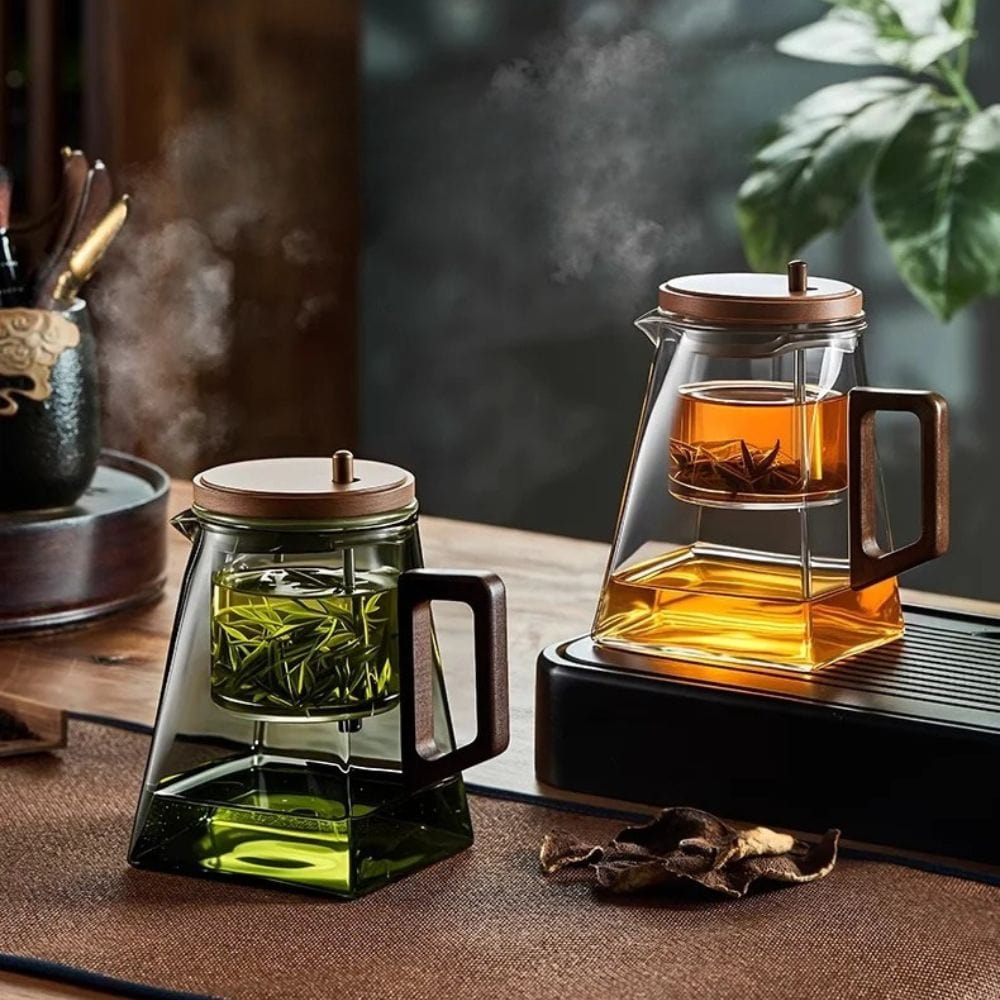


Cast Iron vs. Enameled Cast Iron: What's the Difference? Guide
Introduction: A Very Common Confusion
You're looking for a cast iron teapot and you come across two types: "cast iron" and "enameled cast iron". What's the difference? Which one to choose? This confusion is very common and can lead to unpleasant surprises (like putting an enameled teapot on the stove!).
This guide compares these two types of teapots to help you make the right choice according to your needs. 🫖

-30% automatic by clicking below
Teapot + 4 cups + box 🍵
📖 Table of Contents
1. Definitions: What's the Difference?
The difference is simple but crucial:
Bare Cast Iron (Tetsubin)
Interior: Bare, untreated cast iron
Original function: To boil water
Characteristics:
- Rough, grey interior surface
- Can go on the stove ✅
- Requires seasoning
- Releases iron into the water
- Japanese tradition (tetsubin)
Enameled Cast Iron
Interior: Covered with vitrified enamel
Function: To steep tea only
Characteristics:
- Smooth, glossy interior surface
- DO NOT put on the stove ❌
- No seasoning required
- No iron contribution
- Modern/Western style
🔑 The Essential Difference
Bare cast iron (tetsubin) is a kettle designed to heat water on the stove. Enameled cast iron is a teapot designed solely for steeping tea with already hot water. Confusing them can irreversibly damage your teapot!
2. How to Identify Them?
Here's how to distinguish the two types:
🔍 The Visual Test (Interior)
Look at the inside of the teapot:
- Bare cast iron: Rough, granular, matte dark grey/black surface
- Enameled cast iron: Smooth, glossy surface, often black, white, or colored
This is the most reliable test!
👆 The Touch Test
Run your finger inside:
- Bare cast iron: Granular, slightly rough texture
- Enameled cast iron: Smooth, glass-like texture
🧲 The Filter Test
Check for the presence of a filter:
- Bare cast iron (tetsubin): Generally NO filter (it's a kettle)
- Enameled cast iron: Almost always WITH a removable filter (it's a teapot)
| Indicator | Bare Cast Iron | Enameled Cast Iron |
|---|---|---|
| Interior | Rough, matte grey | Smooth, glossy |
| Filter | Rarely | Almost always |
| Price | €€€ to €€€€ | € to €€€ |
| Typical Origin | Japan (artisanal) | China, Europe (industrial) |
| Name | Tetsubin, Nambu | "Cast iron teapot", "Cast iron teapot" |
⚠️ Beware of Marketing Confusions
Many sellers use the term "tetsubin" for enameled teapots. A true tetsubin is bare cast iron and generally costs more (€100+). If the price is very low and there's a filter, it's likely enameled cast iron.
3. Detailed Comparison
Here's a complete comparison:
| Criterion | Bare Cast Iron | Enameled Cast Iron | Winner |
|---|---|---|---|
| On the Stove | ✅ YES | ❌ NO | 🏆 Bare (versatility) |
| Iron contribution | ✅ Yes (beneficial) | ❌ No | 🏆 Bare |
| Maintenance | ⭐⭐ Demanding | ⭐⭐⭐⭐⭐ Easy | 🏆 Enameled |
| Risk of rust | ⭐⭐ High if poorly maintained | ⭐⭐⭐⭐⭐ Very low | 🏆 Enameled |
| Seasoning | Necessary | Not necessary | 🏆 Enameled |
| Flavor evolution | ⭐⭐⭐⭐⭐ Improves | ⭐⭐⭐ Stable | 🏆 Bare |
| Tradition | ⭐⭐⭐⭐⭐ Authentic | ⭐⭐⭐ Modern | 🏆 Bare |
| Price | €€€ to €€€€ | € to €€€ | 🏆 Enameled |
| Availability | Specialized | Everywhere | 🏆 Enameled |
| Heat retention | ⭐⭐⭐⭐⭐ Excellent | ⭐⭐⭐⭐⭐ Excellent | = Tie |
⚖️ Overall Verdict
Bare cast iron: For purists, tradition lovers, who want to heat on the stove and benefit from the iron.
Enameled cast iron: For practical daily use, easy maintenance, accessible price.

-30% automatic by clicking below
With removable filter 🍵
4. Pros and Cons
⚙️ Raw Cast Iron: Pros
- ✅ Can go on the stove: Heat water directly in it
- ✅ Iron intake: Enriches water with iron (beneficial for health)
- ✅ Flavor improves: Patina develops unique flavors
- ✅ Authentic tradition: True Japanese art
- ✅ Durability: Can last generations if well maintained
- ✅ Art object: Often handcrafted
⚙️ Raw Cast Iron: Cons
- ❌ Demanding maintenance: Mandatory drying, risk of rust
- ❌ Seasoning required: Preparation before first use
- ❌ High price: Real tetsubin are expensive
- ❌ Less practical: No integrated filter
- ❌ Initial metallic taste: Before the patina forms
✨ Enamelled Cast Iron: Pros
- ✅ Easy maintenance: Rinse, dry, that's all
- ✅ No seasoning: Ready to use immediately
- ✅ No rust: Enamel protects the cast iron
- ✅ Affordable price: Much cheaper than raw cast iron
- ✅ With filter: Practical for direct brewing
- ✅ Varied design: Many colors available
✨ Enamelled Cast Iron: Cons
- ❌ Not for direct heat: Enamel cracks and chips
- ❌ No iron intake: Enamel acts as a barrier
- ❌ Stable flavor: No evolution over time
- ❌ Less authentic: Modern product, often industrial
- ❌ Fragile enamel: Can chip with impacts
5. Which Type for Which Use?
Here are our recommendations:
Japanese Tradition
Raw cast iron – Authentic tetsubin
Daily Use
Enamelled cast iron – Practical and easy
Heating on the Stove
Raw cast iron – Only possible option
Beginner Gift
Enamelled cast iron – Less restrictive
Iron Intake
Raw cast iron – Releases iron into the water
Decoration / Colors
Enamelled cast iron – More design choices
Collection / Investment
Raw cast iron – Appreciates in value
Limited Budget
Enamelled cast iron – Accessible price
6. On the Stove: The Big Difference
This is THE crucial difference between the two:
✅ Raw Cast Iron ON THE STOVE
The tetsubin is designed to go on the stove. That's its primary function!
- Heat water directly in it
- Use low to medium heat
- Never let it boil violently
- Never leave empty on the stove
- Beware of the hot handle!
Consult our guide: Cast iron teapot on the stove: can it?
❌ Enamelled Cast Iron NEVER ON THE STOVE
Putting an enamelled teapot on the stove = disaster guaranteed:
- The enamel cracks under the effect of heat
- Enamel chips fall into the tea
- The exposed cast iron starts to rust
- The teapot is permanently damaged
- No repair possible
Correct use: Heat water in a separate kettle, then pour into the teapot.
⚠️ Common Mistake
Many people buy a "cast iron" teapot thinking they can put it on the stove, without realizing it's enamelled cast iron. ALWAYS check the interior before using it on a heat source!
7. Maintenance
Maintenance differs considerably:
⚙️ Raw Cast Iron Maintenance
- 🔧 Initial seasoning: Mandatory before first use (see our guide)
- 💧 Rinsing: With clear water only, NEVER soap
- ☀️ Drying: Immediate and complete, lid open
- 🚫 Storage: Dry place, never store wet
- 🔄 Regular use: The more you use it, the better
- 🟤 Light rust: Normal, can be treated
✨ Enamelled Cast Iron Maintenance
- ✅ No seasoning: Ready to use
- 💧 Rinsing: Hot water, a little mild soap is OK
- ☀️ Drying: Recommended but less critical
- 🚫 Dishwasher: Not recommended
- ⚠️ Avoid shocks: Enamel can chip
- 🧽 Stains: Baking soda if necessary
💡 Simple Rule
Raw cast iron: Treat as a precious object that requires attention.
Enamelled cast iron: Treat as a normal teapot, without excess.

8. Frequently Asked Questions
❓ Is my teapot raw cast iron or enamelled?
Look at the interior: rough and grey surface = raw cast iron. Smooth and shiny surface = enamelled. If it has a removable filter, it's almost certainly enamelled. If in doubt, DO NOT put it on the stove!
❓ Which one retains heat better?
Both are excellent at retaining heat – that's the main advantage of cast iron! The difference in thermal retention between raw and enamelled is negligible.
❓ Is the iron released by raw cast iron good for health?
Yes, it's beneficial! Raw cast iron releases ferrous iron that is easily absorbed by the body. This is particularly interesting for people with iron deficiency. Enamelled cast iron does not release iron because the enamel acts as a barrier.
❓ Why is enamelled cast iron cheaper?
Enamelled cast iron is generally produced industrially (often in China), while true Japanese tetsubin are handcrafted. Enamelling also allows for hiding casting defects, reducing production costs.
❓ Can an enamelled teapot be converted to raw cast iron?
No, it's impossible. The enamel is vitrified and an integral part of the teapot. Attempting to remove it would destroy the teapot. If you want the benefits of raw cast iron, you need to buy a real tetsubin.
Conclusion: Raw or Enamelled?
The choice between raw cast iron and enamelled cast iron depends on your priorities: tradition and authenticity vs. practicality and ease.
📝 Summary: How to Choose?
- ⚙️ Raw cast iron if: Japanese tradition, heating on the stove, iron intake, long-term investment
- ✨ Enamelled cast iron if: Daily use, easy maintenance, limited budget, beginner
- 🔍 Identify: Rough interior = raw / Smooth interior = enamelled
- 🔥 On the stove: Raw YES / Enamelled NEVER
- 💪 Iron: Raw releases iron / Enamelled does not
- 🧹 Maintenance: Raw demanding / Enamelled easy
Also discover our guides on cast iron teapots, seasoning cast iron teapots, and cast iron teapots on the stove.
Whatever your choice, enjoy your tea! 🫖✨🍵
🫖 Discover Our Teapots and Accessories
Cast iron, ceramic, glass teapots... Find what makes you happy!
-30% with code BLOG30 • Free shipping
