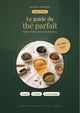

Gong Fu Cha: The Complete Guide to the Chinese Method
Introduction: The Art of Tea with Mastery
Gong Fu Cha (工夫茶 or 功夫茶) literally means "tea prepared with skill" or "tea with effort." This traditional Chinese method transforms the simple act of preparing tea into a refined art that reveals all the complexity and richness of the world's best teas.
Unlike Western brewing (a large quantity of water, a long steeping time), Gong Fu Cha uses many leaves, little water, and very short infusions repeated many times. The result: a constantly evolving sensory experience, where each infusion reveals new nuances.
Discover the secrets of Gong Fu Cha: its philosophy, essential utensils, step-by-step technique, and parameters for each type of tea. The ultimate guide to mastering the art of Chinese tea! 🍵🇨🇳

-30% automatic by clicking below
Semi-automatic teapot • Complete 🏆
📖 Table of Contents
1. What is Gong Fu Cha?
Gong Fu Cha (工夫茶) is the traditional Chinese method of tea preparation, developed in the Fujian and Guangdong regions. The term can be written 工夫茶 or 功夫茶 – both characters 工夫 and 功夫 both meaning "skill acquired through practice".
🥋 Gong Fu: The Same Philosophy as Martial Arts
The term "Gong Fu" (功夫) is the same as that used for Chinese martial arts (Kung Fu). In both cases, it refers to mastery acquired through diligent practice. Preparing tea using Gong Fu Cha is applying this same philosophy: attention, precision, repetition, and continuous improvement. Each session is an opportunity to refine one's technique.
📊 The Fundamental Principles
- High Ratio: 5-8g of tea per 100-150ml of water (vs 2-3g in Western method)
- Short Infusions: 10-30 seconds (vs 3-5 minutes)
- Multiple Infusions: 8 to 15 infusions per session (vs 1-2)
- Fresh Water: Each infusion with fresh water
- Adapted Utensils: Gaiwan or small Yixing teapot
- Full Attention: Every gesture matters
💡 Why so many leaves, so little time?
The idea is to gradually extract the tea compounds rather than all at once. The first infusions release the most volatile and delicate aromas; subsequent ones reveal deeper notes. This way, you explore the full aromatic spectrum of the tea, from the sharp attack to the complex base notes.
2. History and Origins
Gong Fu Cha originated in the coastal provinces of southeast China, regions renowned for their exceptional teas.
📜 Chronology of Gong Fu Cha
- Ming Dynasty (1368-1644): Shift from compressed tea to loose leaf tea; new brewing methods
- 17th Century: Development of Yixing purple clay teapots
- 18th Century: Codification of Gong Fu Cha in Fujian and Guangdong
- 19th Century: Spread to Taiwan with Hoklo migrants
- 20th Century: Decline in mainland China, preservation in Taiwan
- 1980s-90s: Renaissance in China with economic opening
- 2000s: Global popularization with interest in premium tea
🏔️ The Birthplaces of Gong Fu Cha
- Chaozhou (Guangdong): Considered the original birthplace. Precise, austere style, focused on Dan Cong oolong.
- Fujian: Region of oolongs (Tie Guan Yin, Da Hong Pao) and black teas. More relaxed style.
- Taiwan: Preserved and refined the tradition during difficult periods in China. Modern innovations.
💡 The Chaozhou Style: The Quintessence
The Chaozhou style is considered the "purest." It traditionally uses 3 small cups (三杯, sānbēi) representing heaven, earth, and man. The technique is highly codified: every gesture has its reason for being. It is the benchmark for Gong Fu Cha purists.
3. The Philosophy of Gong Fu Cha
Beyond technique, Gong Fu Cha embodies a life philosophy:
☯️ The Values of Gong Fu Cha
- Presence (正念, zhèngniàn): Being fully in the present moment
- Patience (耐心, nàixīn): Taking time, not rushing
- Respect (敬, jìng): Towards the tea, utensils, guests
- Harmony (和, hé): Balance between all elements
- Simplicity (簡, jiǎn): The essential without superfluity
- Improvement (進步, jìnbù): Always striving to progress
🧘 The Meditation of Tea
Gong Fu Cha is often compared to a form of active meditation. The attention required for each gesture – pouring the water, observing the infusion, serving with precision – anchors the mind in the present. Distracting thoughts naturally fade away when one focuses on the dance of the leaves and the evolution of aromas.
This meditative dimension brings Gong Fu Cha closer to the Japanese tea ceremony, although both traditions have different origins and forms.

-30% automatic by clicking below
Glazed ceramic • Gift box available ✨
4. Essential Utensils
Gong Fu Cha requires specific utensils, each with a precise function:
Gaiwan
Lidded bowl for infusing
Yixing Teapot
Purple clay alternative
Cha Hai
Serving pitcher
Cups
Small cups (30-50ml)
Cha Ze
Tea spoon
Cha Pan
Draining tea tray
Kettle
Temperature control
Cha Jin
Tea towel
✅ Minimum Equipment to Start
- A gaiwan (100-150ml) – the most versatile utensil
- A cha hai (pitcher) – to homogenize and serve
- 2-3 small cups – for you and your guests
- A kettle – ideally with temperature control
- A tray or a towel – for splashes
To learn more about the gaiwan, consult our complete gaiwan guide.
💡 Gaiwan or Yixing Teapot?
A porcelain gaiwan is neutral and versatile – perfect for exploring different teas. A Yixing teapot made of purple clay develops a patina that enhances certain teas but must be dedicated to a single type. Start with a gaiwan, then invest in a Yixing when you find your favorite tea.
5. Step-by-Step Method
Here is the complete Gong Fu Cha method, with traditional Chinese terms:
1 Utensil Preparation
Arrange all your utensils on the tray. Boil the water. Take a moment to center yourself and mentally prepare for the session.
2 Preheating (温杯, Wēn Bēi)
Pour hot water into the gaiwan/teapot, swirl it around, then transfer it to the cha hai and cups. Discard this water. This step warms all the utensils and prepares the tea to receive the leaves.
3 Presenting the Tea (賞茶, Shǎng Chá)
Place the dry leaves in the cha ze (spoon) and present them to the guests. Observe their shape, color, and smell their dry fragrance. This is the first contact with the tea.
4 Placing the Tea (置茶, Zhì Chá)
Transfer the leaves into the preheated gaiwan. Dosing: fill approximately 1/3 to 1/4 of the gaiwan for rolled oolongs, or a generous layer for loose leaf teas.
5 Awakening the Leaves (醒茶, Xǐng Chá)
Pour hot water over the leaves and immediately discard this first infusion (3-5 seconds). This rinse "awakens" the leaves, removes dust, and opens the tea's structure. For pu-erh, 2 rinses may be necessary.
6 Appreciating the Aroma (聞香, Wén Xiāng)
After emptying the rinse water, lift the gaiwan lid and smell the wet leaves. This is the "lid aroma" (蓋香, gàixiāng), often the most aromatic moment.
7 First Infusion (泡茶, Pào Chá)
Pour water at the appropriate temperature. Infuse for 10-20 seconds for the first true infusion. Pour into the cha hai, then into the cups. Serve and enjoy!
8 Subsequent Infusions
Repeat, slightly increasing the steeping time (+5-10 seconds per infusion). Observe the evolution: the first infusions are vibrant and floral, the subsequent ones deeper and more mineral. A good tea can offer 8 to 15 infusions.
6. Parameters by Tea Type
Each type of tea has its optimal parameters for Gong Fu Cha:
| Tea Type | Ratio (g/100ml) | Temperature | 1st Infusion | Subsequent | No. of Infusions |
|---|---|---|---|---|---|
| Light Oolong | 5-6g | 85-90°C | 15-20 sec | +5 sec | 8-12 |
| Roasted Oolong | 6-7g | 95-100°C | 15-20 sec | +5-10 sec | 8-15 |
| Pu-erh Sheng | 5-6g | 90-95°C | 10-15 sec | +5 sec | 10-15+ |
| Pu-erh Shou | 5-6g | 100°C | 10-15 sec | +5-10 sec | 10-15+ |
| White Tea | 4-5g | 80-85°C | 20-30 sec | +10 sec | 6-10 |
| Chinese Green Tea | 4-5g | 75-85°C | 15-20 sec | +5-10 sec | 4-6 |
| Chinese Black Tea | 5-6g | 90-95°C | 10-15 sec | +5 sec | 6-10 |
⚠️ These parameters are starting points!
Each tea is unique. Adjust according to your taste, the freshness of the tea, and your equipment. If the tea is too strong: reduce brewing time or quantity. Too weak: increase. Gong Fu Cha is a constant dialogue with the tea – experiment!
To learn more, consult our guides on infusion temperature and infusion time.
7. Best Teas for Gong Fu Cha
Certain teas are particularly suited to the Gong Fu method:
🍂 Oolong
THE tea for Gong Fu. Tie Guan Yin, Da Hong Pao, Dan Cong...
🟤 Pu-erh
Sheng and Shou. Dozens of infusions possible!
🤍 White Tea
Bai Hao Yin Zhen, Shou Mei. Subtle and evolving.
⬛ Chinese Black Tea
Dian Hong, Jin Jun Mei. Softer than with Western methods.
🍃 Chinese Green Tea
Long Jing, Bi Luo Chun. Low temperature, short sessions.
🔴 Red Tea
Premium Chinese black teas. Multiple revealing infusions.
⭐ The Stars of Gong Fu Cha
- Tie Guan Yin (鐵觀音): Fujian Oolong, floral and creamy
- Da Hong Pao (大紅袍): Wuyi Oolong, mineral and roasted
- Phoenix Dan Cong (鳳凰單叢): Chaozhou Oolong, aromatic
- Yunnan Pu-erh: Sheng (raw) or Shou (cooked), deep and complex
- Bai Hao Yin Zhen (白毫銀針): White tea with silver buds
- Jin Jun Mei (金駿眉): Premium black tea, sweet and honeyed
To learn more about these teas, consult our guides on green tea, black tea, and white tea.

-30% automatic by clicking below
Gaiwan + 3 cups • Pouch included 🧳
8. Gong Fu Cha vs. Western Method
Both approaches have their merits. Here's an objective comparison:
🇨🇳 Gong Fu Cha
- Lots of tea, little water
- 10-30 second infusions
- 8-15 infusions per session
- Flavor evolution
- Meditative experience
- Gradual extraction
- Specific utensils
- More time required
🌍 Western Method
- Little tea, lots of water
- 3-5 minute infusions
- 1-2 infusions maximum
- Consistent flavor
- Practical and quick
- Complete extraction at once
- Classic teapot is sufficient
- Suited for busy daily life
🤔 When to Choose Each Method?
- Gong Fu Cha: When you have time, for premium teas, for a complete sensory experience, in good company
- Western method: For daily use, for a quick cup, with flavored teas or blends, in the office
💡 The Best of Both Worlds
You don't have to choose! Many enthusiasts use Gong Fu Cha for their premium teas on weekends, and the Western method during the week. Adapt the method to your context and the tea you have on hand.
9. Mistakes to Avoid
❌ The 10 Most Common Mistakes
- Under-dosing the tea: Gong Fu requires MORE tea than the Western method
- Infusing too long: 10-30 seconds, not 3 minutes!
- Water not hot enough: For roasted oolongs and pu-erh, use boiling water
- Skipping the rinse: Essential to awaken the leaves
- Not preheating: Cold utensils cool the water
- Using low-quality teas: Gong Fu reveals everything, including flaws
- Rushing: Take your time to appreciate each step
- Ignoring evolution: Each infusion is different, observe!
- Leaving the lid closed: Between infusions, open to avoid "cooking" the leaves
- Giving up too early: The last infusions are often the most interesting
💡 The Secret of Masters
Chinese masters say: "Tea speaks to you, learn to listen." Observe the color of the infusion, the smell of the wet leaves, the texture in the mouth. Adjust your parameters according to what the tea tells you. It's a dialogue, not a fixed recipe.
10. Frequently Asked Questions
❓ How long does a Gong Fu Cha session last?
A full session can last from 30 minutes to 2 hours depending on the tea and the number of infusions. It's an activity that requires time – which is precisely its charm! For a quick session, 3-4 infusions may be enough (15-20 minutes).
❓ Can I do Gong Fu Cha alone?
Absolutely! Solo Gong Fu Cha is a highly appreciated form of meditation. Many enthusiasts have their solitary morning ritual. With 3 small cups, you can also invite friends to share the experience.
❓ Why discard the first infusion?
The rinse (洗茶, xǐchá) has several functions: to clean the leaves of dust, to hydrate and "awaken" compressed leaves, to open the tea's structure for subsequent infusions. It's also a moment of respect for the tea.
❓ Can I use my Western teapot for Gong Fu Cha?
Technically yes, but it's not ideal. Western teapots are generally too large (200-400ml vs 100-150ml) and do not allow for the rapid pouring needed. Invest in a gaiwan – it's affordable and makes all the difference.
❓ Is Gong Fu Cha suitable for beginners?
Yes! The basic technique is accessible. Start with a Taiwanese oolong (Tie Guan Yin, for example), follow the steps described above, and adjust to your taste. Mastery comes with practice – that's the very meaning of "Gong Fu"!
Conclusion: The Art of Taking Time
Gong Fu Cha is much more than a brewing method: it's an invitation to slow down, be present, and explore the full richness that a simple tea leaf can offer. In our fast-paced world, it's a rare – and precious – luxury.
📝 Key Takeaways
- 🍵 Meaning: "Tea prepared with skill" – mastery through practice
- 📊 Principle: Lots of tea, little water, short and multiple infusions
- 🔧 Utensils: Gaiwan (or Yixing teapot), cha hai, small cups
- ⏱️ Time: 10-30 seconds per infusion, 8-15 infusions possible
- 🍃 Ideal Teas: Oolong, pu-erh, white tea, Chinese black tea
- 🧘 Philosophy: Presence, patience, respect, continuous improvement
- 💡 Secret: Listen to the tea and adjust continuously
Explore our collection of tea sets to find your Gong Fu equipment, and discover our tea cups to complete your set!
To learn more, consult our guides on the gaiwan and the Japanese tea ceremony.
Gong Fu Cha: when preparing tea becomes a way of life. 🍵🇨🇳✨
🍵 Equip yourself for Gong Fu Cha
Complete sets, gaiwans, traditional cups... All the equipment to master the art of Chinese tea.
-30% with code BLOG30 • Free shipping