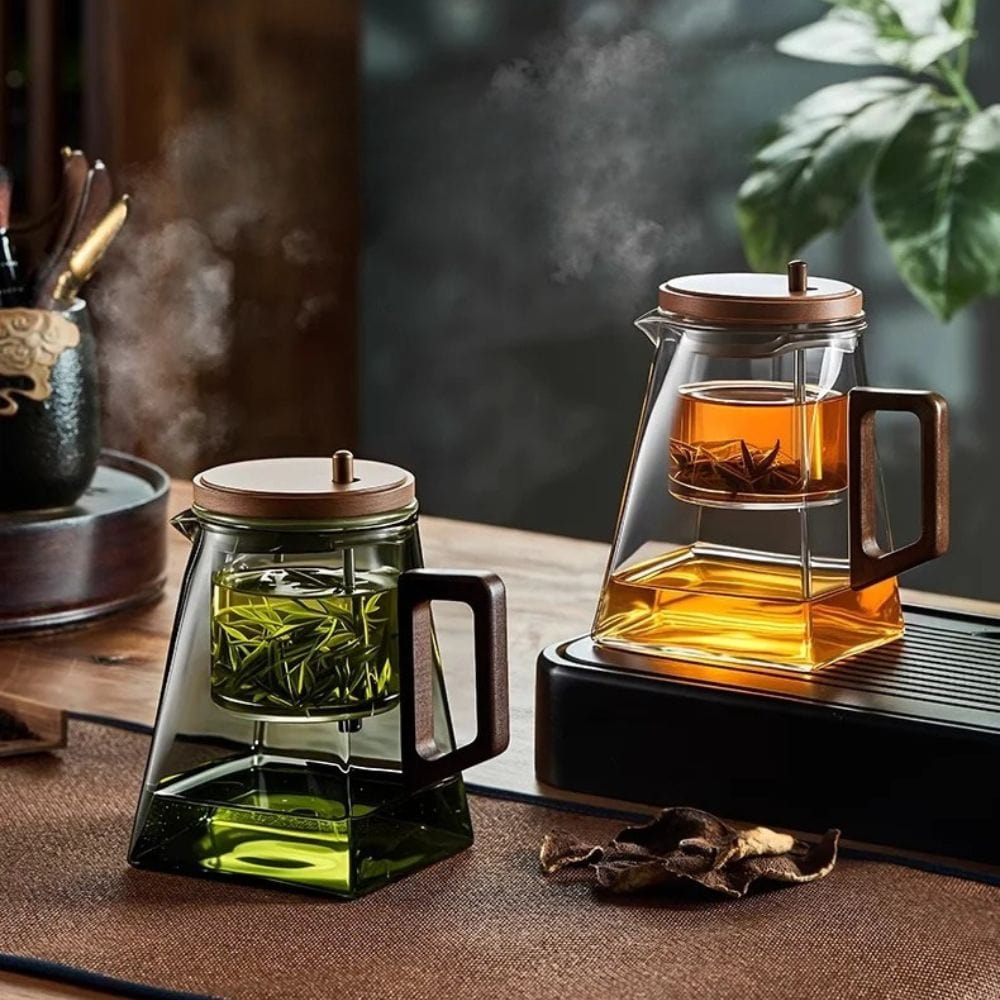


Gyokuro: Complete Guide to Shaded Green Tea
Introduction: The Jewel of Japanese Teas
Gyokuro (玉露) is considered the most precious and refined of Japanese teas. Nicknamed "jade dew," this shaded tea offers a unique tasting experience: an explosion of umami, an incomparable sweetness, and an aromatic complexity that justifies its grand cru status.
Cultivated in the shade for several weeks before harvest, Gyokuro develops flavors found nowhere else. Discover this treasure of Japanese tea heritage. 💎🍵

-30% automatic by clicking below
300ml • Removable filter • Ideal for Gyokuro 💎
📖 Table of Contents
1. What is Gyokuro?
Gyokuro is the most prestigious Japanese green tea, cultivated using a unique method.
💎 "Jade Dew"
Gyokuro (玉露) literally means "precious dew" or "jade dew." This poetic name refers to the intense green color of the infusion and its velvety texture. Unlike Sencha, which is grown in full sunlight, Gyokuro is shaded for 20-30 days before harvest, which radically transforms its chemical composition and taste.
🌿 Shaded Cultivation
20-30 days under shade structures before harvest.
😋 Intense Umami
The highest concentration of L-theanine.
💎 Grand Cru
The most prestigious of Japanese teas.
🎨 Emerald Green
Exceptionally intense color.
📋 Identity Card
- Japanese Name: 玉露 (Gyokuro)
- Meaning: "Precious dew" / "Jade dew"
- Type: Shaded Japanese green tea (superior Kabuse-cha)
- Origin: Japan (Uji, Yame, Shizuoka mainly)
- Shading: 20-30 days minimum (vs 0 for Sencha)
- Harvest: First spring harvest (Ichibancha)
- Form: Fine, shiny dark green needles
- Liquor Color: Luminous jade green
🏆 Gyokuro vs Other Japanese Teas
- vs Sencha: Sencha = full sun, Gyokuro = shade (more umami, less astringency)
- vs Kabusecha: Kabusecha = 7-14 days of shade, Gyokuro = 20-30 days (more intense)
- vs Matcha: Same shaded cultivation, but Matcha = powder, Gyokuro = whole leaves
- vs Genmaicha: Genmaicha = tea + roasted rice, completely different taste
2. The Secret of Shading
Shading is what makes Gyokuro a unique tea:
🌑 Why Cultivate in the Shade?
By depriving the tea plant of light, its chemistry is profoundly altered. The plant, seeking to capture maximum light, increases its production of chlorophyll (intense green color) and L-theanine (umami, sweetness). Simultaneously, the conversion of L-theanine to catechins (bitterness, astringency) is slowed down. The result: a sweet, umami tea with little bitterness.
🛠️ Shading Techniques
- Tana (棚): Scaffolding structure covered with straw mats (traditional)
- Jikagise (直冠せ): Cloths placed directly on the tea plants
- Traditional material: Rice straw mats (Yoshizu)
- Modern material: Black synthetic cloths (more practical)
- Intensity: 70-90% of light blocked
- Duration: Minimum 20 days, up to 30+ for premium
🔬 Chemical Impact of Shading
- L-theanine ↑↑↑: Massive increase (up to 2-3x vs Sencha)
- Chlorophyll ↑↑: More intense green color
- Catechins ↓: Less bitterness and astringency
- Caffeine ↑: Slight increase
- Aromas: Marine notes, umami, sweet sweetness
💡 Did you know?
Gyokuro and Matcha share the same shading cultivation method. The difference? After harvest, the leaves intended for Matcha are spread flat and dried (Tencha), then ground into powder. Gyokuro is rolled into needles and remains in the form of whole leaves.
3. The Great Terroirs
Three regions dominate Gyokuro production in Japan:
Uji (Kyoto)
Historic birthplace, the most prestigious. Perfect balance of umami/sweetness.
Yame (Fukuoka)
Intense umami, sweet notes. Champion of recent competitions.
Shizuoka
More accessible, good quality. Marked vegetal notes.
🏯 Uji (Kyoto) - The Historic Cradle
- History: Gyokuro invented in Uji in 1835 by Yamamoto Kahei
- Prestige: The most renowned terroir, highest prices
- Character: Perfect balance of umami, sweetness, and freshness
- Cultivars: Samidori, Gokoh, Uji-hikari
- Appellation: Protected "Uji-cha"
🌿 Yame (Fukuoka) - The Challenger
- Reputation: Has dominated national competitions for years
- Character: Very intense umami, pronounced sweet notes
- Climate: Frequent mists = additional natural shading
- Cultivars: Yabukita, Saemidori, Okumidori
- Special Feature: "Dentō Hon Gyokuro" (traditional method) is highly sought after
| Terroir | Character | Price | Availability |
|---|---|---|---|
| Uji (Kyoto) | Balanced, elegant | €€€€ | Rare |
| Yame (Fukuoka) | Intense umami, sweet | €€€-€€€€ | Moderate |
| Shizuoka | Grassy, accessible | €€-€€€ | Good |
| Kagoshima | Mild, modern | €€ | Good |

-30% automatic discount by clicking below
6 pieces • Teapot + cups • Premium 🇯🇵
4. Flavor Profile
Gyokuro offers a unique and intense tasting experience:
Umami
Round, deep, savory flavor
Marine
Notes of seaweed, iodine
Grassy
Fresh grass, spinach
Buttery
Velvety, creamy texture
Sweet
Lingering natural sweetness
Nori
Characteristic dried seaweed
👃 Olfactory Notes
- Dry leaves: Nori seaweed, fresh grass, marine notes
- First infusion: Broth, intense umami, soft vegetal
- Evolution: Sweeter and more floral notes over successive infusions
👅 On the Palate
- Attack: Enveloping umami, almost "broth-like"
- Body: Dense, velvety, oily texture
- Flavors: Seaweed, cooked spinach, butter, sweet notes
- Finish: Long, smooth, sweet, without bitterness
- Astringency: Almost absent if well prepared
💡 The Umami Experience
Gyokuro is often compared to dashi broth or nori seaweed. This intense umami flavor can surprise beginners used to lighter green teas. It's a connoisseur's tea that reveals its magic with proper preparation and an open mind for taste!
5. Production
Gyokuro production is a precise and demanding art:
📋 Production Steps
- Shading (覆い, Ooi): Tea bushes are covered 20-30 days before harvest
- Harvest (摘採, Tekisai): First spring harvest, only young shoots
- Steaming (蒸し, Mushi): Steam to stop oxidation (20-40 seconds)
- Cooling: Rapid cessation of cooking
- Rolling (揉捻, Junen): Several steps to shape the needles
- Drying (乾燥, Kansō): Humidity reduced to ~5%
- Sorting and Finishing: Selection of the best leaves
🌱 The Importance of Harvest
- Ichibancha (一番茶): First harvest (late April-May), the most prized
- Young shoots: Only the bud + 1-2 leaves
- Picking: Manual for premium, mechanical for standard
- Timing: Crucial – too early = not developed enough, too late = too mature
🎋 Cultivars Used
Certain cultivars are particularly suited for Gyokuro:
- Gokoh: The "king" cultivar of Gyokuro, exceptional umami
- Samidori: Sweetness and elegance, highly prized in Uji
- Saemidori: Intense green color, popular in Yame
- Yabukita: The most common, versatile
- Asahi: Traditional, complex notes
6. How to Prepare It
Gyokuro requires specific preparation to unleash its full potential:
⚠️ Warning: Low Temperature is Mandatory!
Gyokuro is prepared with much cooler water than other teas (50-60°C vs 70-80°C for Sencha). Water that is too hot will extract bitterness and destroy delicate umami notes. This is THE golden rule to absolutely follow.
📋 Traditional Method (Recommended)
- Dosing: 5g (1 tablespoon) for 50-60ml (small quantity!)
- Temperature: 50-60°C (let boiling water cool for 5-7 min)
- Time: 2-3 minutes (longer than Sencha due to cold water)
- Pour: Until the last drop
- Re-infusions: 2nd at 60°C/1min, 3rd at 70°C/30sec
Note: You will get a small amount of very concentrated liquor – this is normal!
| Infusion | Temperature | Time | Character |
|---|---|---|---|
| 1st | 50-60°C | 2-3 min | Intense umami, sweet |
| 2nd | 60°C | 1 min | Balanced, vegetal notes |
| 3rd | 70°C | 30 sec | Lighter, slight astringency |
| 4th+ | 80°C | 15-30 sec | Final notes |
🍵 Ideal Equipment
- Kyusu (急須): Japanese teapot with a side handle
- Houhin (宝瓶): Handleless teapot, ideal for Gyokuro (cold water)
- Yuzamashi (湯冷まし): Cooling bowl to lower water temperature
- Small cups: Yunomi or small chawan
The Houhin is particularly suitable because it can be held bare-handed (lukewarm water).
💡 Tip: Cooling the Water
To reach 50-60°C: pour boiling water into a bowl, wait 1 min (~80°C), pour into another bowl, wait 1 min (~60°C). Each transfer causes a loss of approximately 10°C. Or simply use a thermometer!

-30% automatic discount by clicking below
350ml • Elegant glass • Large capacity ✨
7. Health Benefits
Gyokuro concentrates the benefits of green tea to a higher level:
🧠 L-Theanine: Champion in All Categories
Gyokuro contains the highest concentration of L-theanine of all teas:
- Concentration: 2-3x more than Sencha
- Effect: Relaxation without drowsiness
- Focus: Improves concentration and creativity
- Synergy: L-theanine + caffeine = "calm alertness"
- Mood: Calming effect on stress and anxiety
🛡️ Powerful Antioxidants
- Catechins: EGCG and others (less than Sencha but present)
- Chlorophyll: Detoxifying, higher due to shading
- Vitamins: C, E, beta-carotene
- Minerals: Zinc, selenium, chromium
☕ Caution with Caffeine
Gyokuro contains more caffeine than other green teas:
- Content: ~35-50mg per cup (vs ~25-30mg for Sencha)
- Reason: Shading slightly increases caffeine
- Effect: Mitigated by L-theanine (no jitteriness)
- Advice: Avoid after 4 PM if sensitive
💡 The "Zen" Effect
Gyokuro was traditionally consumed by Zen monks for meditation. The high L-theanine/caffeine ratio provides a state of calm focus, perfect for activities requiring concentration and creativity. This is why it is also appreciated by artists and intellectuals in Japan.
8. Frequently Asked Questions
❓ Why is Gyokuro so expensive?
Several factors: shading requires costly infrastructure, manual harvesting of young shoots requires significant labor, limited production (less than 1% of Japanese tea), and prestigious terroirs (Uji, Yame) command high prices. A good Gyokuro costs 30-100€/100g, while grand crus exceed 200€/100g.
❓ Can I prepare Gyokuro like Sencha?
Not recommended. Water at 70-80°C (Sencha temperature) will extract too many catechins and make Gyokuro bitter and astringent, ruining its umami notes. The low temperature (50-60°C) is truly essential for this tea.
❓ What is the difference between Gyokuro and Kabusecha?
Both are shade-grown teas, but Kabusecha is shaded for 7-14 days (vs 20-30 for Gyokuro). Kabusecha is a "middle ground": more umami than Sencha, less than Gyokuro. It's a good introduction to shade-grown teas at a more accessible price.
❓ Can you eat Gyokuro leaves?
Yes, it's even recommended! Infused Gyokuro leaves are tender and flavorful. In Japan, they are seasoned with soy sauce and bonito flakes, or added to salads. This is a way to enjoy all the nutrients (fiber, vitamins) that remain in the leaves.
❓ How to store Gyokuro?
Gyokuro is delicate and must be stored carefully: in an opaque airtight container, ideally in the refrigerator (especially once opened). Allow it to return to room temperature before opening to avoid condensation. Consume within 3-6 months after opening.
Conclusion: The Excellence of Japanese Tea
Gyokuro is much more than just a tea: it's the ultimate expression of Japanese craftsmanship, a concentrate of umami and sweetness that transports you to a state of contemplative calm. If you have never tasted a truly well-prepared Gyokuro, you have yet to discover all that green tea can offer.
📝 Key Takeaways
- 💎 Definition: Japanese shade-grown green tea (20-30 days)
- 🌊 Taste: Intense umami, marine, sweet, zero bitterness
- 🌡️ Temperature: 50-60°C (CRUCIAL!)
- ⏱️ Infusion: 2-3 min, small amount of water
- 🏯 Terroirs: Uji (prestige), Yame (umami), Shizuoka
- 🧠 Key Benefit: Record L-theanine = calm + focus
- 💰 Price: Premium (30-200€/100g)
Also discover our guides on Sencha, Matcha, Genmaicha and infusion temperature.
Discover the dewdrop of jade! 💎🍵✨
💎 Discover Our Premium Japanese Tea Accessories
Kyusu, cups, sets... Everything to enhance your Gyokuro!
-30% with code BLOG30 • Free shipping
