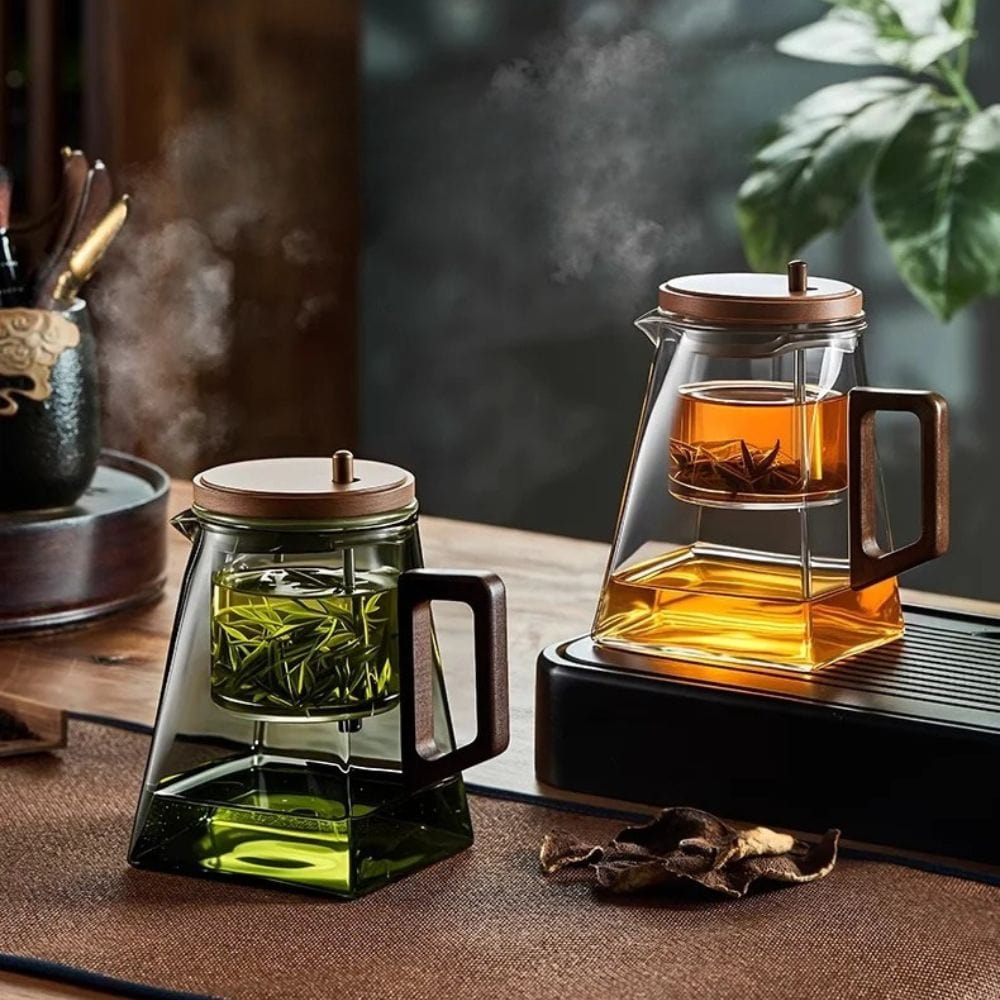


Glass Mug: Complete Guide (Double Wall, Borosilicate, Design)
Introduction: Transparency in the Service of Tea
The glass cup revolutionizes the tea experience by adding a visual dimension to tasting. Observing the leaves dance, admiring the color of the liquor develop, watching floral infusions bloom – glass transforms each cup into a spectacle.
From simple borosilicate glass to sophisticated double-walled cups, this modern material appeals to tea lovers with its refined elegance and perfect taste neutrality. A glass cup retains no aroma, alters no flavor: it reveals the tea in its purest expression.
Discover our complete guide to the glass cup: types, technologies, benefits, and tips for choosing your transparent tasting companion. 🥛✨

-30% automatic by clicking below
70 ml • Craftsmanship • Delicate finishes ✨
📖 Summary
1. Why Choose a Glass Cup?
The glass cup offers unique advantages that other materials cannot match:
👁️ The Complete Visual Experience
Glass adds a sensory dimension that opaque cups cannot offer. Observing the color of the tea develop, watching the leaves unfurl, admiring the dance of flowering teas like jasmine pearl – it's a visual meditation that enriches every tasting.
🎭 Perfect Neutrality
Glass absorbs no aroma and retains no flavor. Each tea expresses itself in its original purity, without interference.
🌈 Visual Appreciation
Observing the exact color of the liquor helps to evaluate the infusion. Jade for green tea, amber for oolong, deep red for black.
🧹 Optimal Hygiene
Non-porous surface, easy to clean. No residues, no stubborn stains like on some ceramics.
♻️ Eco-Responsible
100% recyclable material, durable over time. An ecological alternative to plastics and unsustainable materials.
🔬 Glass vs. Other Materials
💡 For Discerning Tasters
Tea professionals often use glass to objectively evaluate a tea. The neutrality of the material and the ability to observe the liquor make it the ideal tool for comparative tastings and learning the nuances between teas.
2. Types of Glass Cups
The market offers several types of glass cups, each with its own specific features:
Single Wall Glass
Classic and affordable. Single wall, cools quickly. Ideal for lukewarm teas.
Double-Walled
Thermal insulation. Magical floating effect. The current must-have for hot tea.
With Infuser
Integrated glass or stainless steel filter. Practical for loose leaf tea at the office.
Design & Art
Creative shapes, colored glass, artistic details. Decorative pieces.
| Type | Insulation | Price | Ideal Use |
|---|---|---|---|
| Single wall glass | Low | €5-15 | Iced teas, warm infusions |
| Double-walled | Excellent | €15-40 | All hot teas |
| With infuser | Variable | €20-50 | Office, travel, on-the-go |
| Design/Art | Variable | €30-100+ | Decoration, collection |
| Chinese style | Low | €10-30 | Gong Fu Cha, green teas |
🇨🇳 Glass in Chinese Tradition
In China, glass cups are particularly appreciated for high-quality green teas such as Longjing or Biluochun. Watching the leaves "dance" in the water is considered an integral part of the experience. Chinese glass cups are often tall and narrow to maximize this visual spectacle.
3. Double-Walled Technology
Double-walled cups represent a major innovation that has transformed the use of glass for hot beverages:
🔬 How Does It Work?
Two layers of glass separated by a thin layer of air (or partial vacuum) create a thermal barrier. Air being an excellent insulator, the heat of the tea stays inside while the outside remains comfortable to the touch. The same principle as double-glazed windows!
✨ Advantages of Double Walls
- Thermal insulation: Tea stays hot longer
- Comfort: No burnt fingers, even with very hot drinks
- Visual effect: Tea appears to "float" in the air – magical effect
- No condensation: No drips on the table with cold drinks
- Versatility: Perfect for hot AND cold
⚠️ Points of Attention
- Fragility: More delicate than single-walled glass (two thin walls)
- Price: More expensive than classic glass
- Dishwasher safe: Check compatibility (not all are suitable)
- Small hole: Normal! Allows pressure equalization during manufacturing
💡 The Small Hole: It's Normal!
Many double-walled cups have a tiny hole at the bottom. This is perfectly normal: it allows pressure to equalize between the two walls during manufacturing. It is usually sealed but can sometimes let air through. This does not affect performance or watertightness.
To complete your equipment, discover our guide to the double-walled teapot.

Automatic 30% off by clicking below
5 unique designs • 150 ml • Gift idea 🎁
4. Borosilicate Glass
Borosilicate glass is the quality standard for glass cups intended for hot beverages:
🔬 What is Borosilicate?
Borosilicate glass contains boron oxide (approximately 13%) which gives it exceptional properties. Invented by Otto Schott in 1893, it is marketed under names like Pyrex®, Duran®, or Simax®.
- Thermal resistance: Withstands temperature shocks (-30°C to +150°C)
- Coefficient of expansion: 3 times lower than ordinary glass
- Chemical resistance: Inert, does not react with food
- Optical clarity: Perfect transparency, no tint
✅ Advantages of Borosilicate
- Safety: No risk of shattering with boiling water
- Durability: More scratch-resistant than ordinary glass
- Health: BPA-free, lead-free, non-toxic substances
- Versatility: Goes from freezer to microwave
- Lightweight: Lighter than soda-lime glass of equal thickness
⚠️ Ordinary Glass vs Borosilicate
Never use ordinary (soda-lime) glass for very hot beverages! Thermal shock can cause cracking or even shattering. Always check that your cup is made of borosilicate glass before pouring boiling water into it.
💡 How to Identify Borosilicate?
Reputable manufacturers indicate "borosilicate glass" or "borosilicate" on the packaging. Borosilicate glass is generally lighter and thinner for equal strength. When in doubt, contact the seller or avoid very cheap products of uncertain origin.
5. Which Teas in a Glass Cup?
Some teas are particularly enhanced by glass, while others are better suited to traditional materials:
🌟 Perfect in Glass
- Chinese green teas: Longjing, Biluochun – the leaves dance beautifully
- White teas: Bai Mudan, Yin Zhen – delicate liquor to admire
- Flower teas: Jasmine pearl, blooming teas – visual spectacle guaranteed
- Blooming teas: These "tea flowers" blossom before your eyes
- Fruity infusions: Bright colors to appreciate
- Iced teas: No condensation with double wall
🤔 Better in Other Materials
- Aged Pu-erh: Prefer Yixing for beneficial seasoning
- Roasted Oolongs: Thick ceramic retains heat better
- Matcha: Traditional chawan is better suited for whisking
- English tea with milk: The English cup in porcelain remains ideal
| Tea Type | Suitable for Glass | Why |
|---|---|---|
| Chinese Green Tea | ⭐⭐⭐ | Leaves dance, jade liquor visible |
| White Tea | ⭐⭐⭐ | Delicate liquor, silver buds visible |
| Blooming Tea | ⭐⭐⭐ | Blossoming spectacle |
| Japanese Green Tea | ⭐⭐ | Vibrant green, but tradition favors ceramic |
| Light Oolong | ⭐⭐ | Amber color, leaves unfurl |
| Black Tea | ⭐⭐ | Possible, but cools faster |
| Pu-erh | ⭐ | Prefer Yixing for seasoning |
6. How to Choose Your Glass Cup
Here are the essential criteria for selecting your ideal glass cup:
📋 The 7 Selection Criteria
- Material: Borosilicate is mandatory for hot beverages
- Single or double wall: Double for hot, single for cold
- Capacity: 100-150 ml (tasting), 250-350 ml (daily)
- Thickness: Thicker = stronger, thinner = more elegant
- Shape: Tall (Chinese green tea), flared (nose for aromas)
- Handle or no handle: With handle if single-walled glass, without if double-walled
- Compatibility: Dishwasher, microwave depending on your needs
🎯 Recommendations by Profile
- Chinese green tea lover: Tall single or double-walled glass 150 ml
- Office use: Double-walled with integrated infuser 350 ml
- Tasting: Set of small double-walled cups 80-100 ml
- Iced tea: Large double-walled glass 400 ml (no condensation)
- Design lover: Creative shapes, artisan blown glass
- Gift: Duo set or matching set with a glass teapot
💡 Ideal Capacity
For hot tea, prefer moderate capacities (100-200 ml) which allow you to drink before the tea cools too much. For iced tea or warm infusions, opt for larger sizes (300-400 ml). The double wall gives you more leeway regarding capacity.

Automatic 30% off by clicking below
6 pieces • Golden finishes • Elegance ✨
7. Care and Precautions
Glass is easy to care for but requires some precautions to last:
✅ Good Practices
- Washing: Hot soapy water, soft sponge
- Rinsing: Thorough to avoid soap marks
- Drying: Soft cloth or air dry
- Storage: Avoid direct stacking, use separators
- Limescale: Diluted white vinegar to remove deposits
⚠️ Important Precautions
- Shocks: Glass remains fragile, handle with care
- Dishwasher: Check compatibility (not all are suitable)
- Thermal variations: Even borosilicate, avoid extremes
- Double wall: Do not immerse completely (risk of infiltration)
- Microwave: OK for borosilicate, avoid if gilded/metal
⚠️ Stubborn Stains
Tea can leave brownish deposits over time. Solutions: baking soda paste, hot white vinegar, or denture tablets (effective!). To prevent, rinse immediately after use and avoid letting tea dry in the cup.
For more tips, consult our guide How to clean your teapot.
8. Frequently Asked Questions
❓ Does a glass cup keep tea hot?
Single-walled glass is a poor insulator – tea cools quickly. However, double-walled offers excellent insulation, comparable or even superior to ceramic. This is THE solution to enjoy the visual advantages of glass without sacrificing temperature.
❓ Can boiling water be poured into a glass?
Only if it's borosilicate glass! Ordinary glass risks cracking or shattering due to thermal shock. Always check the manufacturer's instructions. When in doubt, let the water cool for a few seconds before pouring.
❓ Does glass alter the taste of tea?
No, this is its main advantage! Glass is completely neutral and absorbs no flavors. Unlike stoneware or Yixing which "season," glass presents each tea in its original purity. Ideal for comparative tastings.
❓ Why does my double-walled cup have a hole?
It's normal and necessary! This small hole allows pressure to equalize between the two walls during manufacturing and cooling. It is usually sealed after production. This does not affect the insulation or the watertightness of the cup.
❓ What is the difference between glass and crystal for tea?
Crystal (containing lead or barium) is brighter and more resonant, but less suitable for hot beverages and potentially problematic for frequent food use. For tea, borosilicate glass is safer, more resistant, and perfectly suited.
Conclusion: Transparency, A New Dimension to Tea
The glass cup offers a unique experience that enriches tasting with a fascinating visual dimension. From dancing leaves to revealing colors, it transforms each infusion into a spectacle.
📝 Key Takeaways
- 🔬 Material: Always choose borosilicate glass for hot beverages
- 🔮 Double wall: The must-have for insulation + the "floating" effect
- 🌿 Ideal teas: Chinese green teas, white teas, blooming teas
- 👁️ Key advantage: Perfect taste neutrality + visual experience
- 🧹 Care: Easy, soapy water, vinegar for limescale
- 💡 Tip: Double wall for the office, single wall glass for iced tea
Explore our collection of tea cups and complete your equipment with a matching glass teapot for a harmonious set!
Also discover our guides on other materials: ceramic, porcelain and stoneware.
The glass cup: seeing the tea is already savoring it. 🥛✨
🥛 Discover Our Designer Cups
Glass, ceramic, porcelain... Find the perfect cup to enhance your tea.
30% off with code BLOG30 • Free shipping
