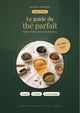

Tea Brewing Temperature: The Complete Guide by Type
Introduction: Temperature, The Secret to a Perfect Infusion
You can have the best tea in the world and the most beautiful teapot... If the water temperature isn't right, your infusion will be a failure. Too hot, it burns the delicate leaves and releases an unpleasant bitterness. Too cold, it doesn't allow the aromas to fully develop.
Water temperature is the most important parameter in tea preparation, even more so than brewing time. It's the difference between a bitter and astringent tea, and a smooth, fragrant, and balanced infusion.
In this comprehensive guide, discover the ideal temperatures for each type of tea, methods to achieve the right temperature, and mistakes to avoid. To properly prepare your teas, also check out our guides on the glass teapot (ideal for observing the infusion) and the Japanese teapot (perfect for green teas). 🌡️🍵

-30% automatic by clicking below
Observe your infusion in real-time 🔮
📖 Summary
- 1. Why Temperature is Crucial
- 2. The Temperature Scale: Overview
- 3. Green Tea: 60-80°C
- 4. White Tea: 70-85°C
- 5. Yellow Tea: 70-80°C
- 6. Oolong Tea: 80-95°C
- 7. Black Tea: 90-95°C
- 8. Pu-erh Tea: 95-100°C
- 9. Infusions and Herbal Teas: 90-100°C
- 10. How to Achieve the Right Temperature
- 11. Common Mistakes to Avoid
- Conclusion
1. Why Temperature is Crucial
Water temperature directly influences what is extracted from the tea leaves:
🔬 The Science of Extraction
Water too hot: Rapidly extracts tannins (bitterness) and destroys delicate amino acids (umami, sweetness). Result: bitter and astringent tea.
Water too cold: Does not extract enough aromatic compounds. Result: bland and characterless tea.
Ideal temperature: Balanced extraction of catechins, L-theanine, essential oils, and other compounds. Result: flavorful and complex tea.
🍃 The Case of Green Tea: The Perfect Example
Green tea is the most sensitive to temperature. At 100°C, it becomes bitter in a few seconds because tannins are massively released. At 70°C, the same leaves will produce a smooth infusion, slightly sweet with subtle vegetal notes.
This is why Japanese teapots are designed for low temperatures, and why Japanese tea masters are so meticulous about this point.
💡 The Simple Rule to Remember
The more oxidized the tea, the higher the temperature can be.
Green tea (unoxidized) → 60-80°C
Oolong (semi-oxidized) → 80-95°C
Black tea (fully oxidized) → 90-95°C
2. The Temperature Scale: Overview
Here is a visual overview of temperatures for each tea family:
GYOKURO
Japanese Shade-Grown Green Tea
DELICATE GREEN TEA
Superior Sencha, Longjing
GREEN / WHITE TEA
Sencha, Bai Mu Dan
LIGHT OOLONG
Tie Guan Yin, Dong Ding
BLACK TEA / OOLONG
Darjeeling, Da Hong Pao
PU-ERH / INFUSIONS
Shou, Sheng, Herbal Teas
Complete Summary Table
| Type of Tea | Temperature | Brewing Time | Recommended Teapot |
|---|---|---|---|
| 🍃 Gyokuro | 50-60°C | 2-3 min | Japanese Kyusu |
| 🍃 Superior Sencha | 60-70°C | 1-1.5 min | Japanese Kyusu |
| 🍃 Sencha / Green Tea | 70-80°C | 1-2 min | Glass or Kyusu |
| 🤍 White Tea | 70-85°C | 3-5 min | Glass or Porcelain |
| 🟡 Yellow Tea | 70-80°C | 2-3 min | Glass or Porcelain |
| 🟠 Light Oolong | 80-90°C | 30s-1 min (Gongfu) | Ceramic or Yixing |
| 🟠 Roasted Oolong | 90-95°C | 30s-1 min (Gongfu) | Cast Iron or Yixing |
| 🟤 Black Tea | 90-95°C | 3-5 min | Cast Iron or Ceramic |
| ⬛ Pu-erh | 95-100°C | 10-30s (Gongfu) | Clay or Yixing |
| 🌿 Infusions / Herbal Teas | 95-100°C | 5-10 min | All materials |
| 🔥 Hojicha / Genmaicha | 85-95°C | 30s-1 min | All materials |
3. Green Tea: 60-80°C
Green tea is the most sensitive to temperature. Water that is too hot destroys its delicate compounds and releases an unpleasant bitterness.
🍃 Japanese Green Teas
Japanese green teas are particularly delicate because they are steamed, which preserves their subtle aromas.
- Gyokuro: 50-60°C • 2-3 min • The most precious, shade-grown
- Superior Sencha: 60-70°C • 1-1.5 min • Pronounced umami notes
- Standard Sencha: 70-80°C • 1 min • The everyday Japanese tea
- Bancha: 80-90°C • 30s-1 min • More rustic, less fragile
- Hojicha: 85-95°C • 30s • Roasted, better withstands heat
For these teas, a Japanese teapot (kyusu) is ideal.
🍃 Chinese Green Teas
Chinese green teas are generally pan-fired, which gives them a slightly different profile.
- Longjing (Dragon Well): 70-80°C • 2-3 min
- Biluochun: 70-75°C • 2 min
- Huangshan Maofeng: 75-80°C • 2-3 min
- Gunpowder: 80-85°C • 2-3 min • More robust
⚠️ Fatal Error: Boiling Water on Green Tea
NEVER pour boiling water (100°C) on delicate green tea! In 10 seconds, you will get an undrinkable, bitter infusion without the subtle notes that make this tea beautiful. If you've made only one mistake in preparing tea, it's probably this one.
4. White Tea: 70-85°C
White tea is the least processed of all teas. Its delicate leaves, often covered with silvery down, deserve special attention.
🤍 White Tea Temperatures
- Bai Hao Yin Zhen (Silver Needles): 70-75°C • 4-5 min • The most delicate
- Bai Mu Dan (White Peony): 75-80°C • 3-4 min • Fuller-bodied
- Shou Mei: 80-85°C • 3-4 min • The most robust
White tea offers floral, honey, and white fruit notes. A glass teapot allows you to admire the leaves dancing in the water.
💡 Tip: Multiple Infusions
White tea lends itself wonderfully to multiple infusions. Start at 75°C, then slightly increase the temperature with each subsequent infusion (up to 85°C). You will discover different facets of the same tea.
5. Yellow Tea: 70-80°C
Yellow tea is a rare tea, produced mainly in China. It undergoes a slight "smothered" oxidation that gives it a unique character.
🟡 Yellow Tea Temperatures
- Jun Shan Yin Zhen: 70-75°C • 3 min • The most famous
- Meng Ding Huang Ya: 75-80°C • 2-3 min
- Huo Shan Huang Ya: 75-80°C • 2-3 min
Yellow tea offers a unique sweetness, with less astringency than green tea and notes of chestnut or roasted corn.

-30% automatic by clicking below
Ideal for all teas 🏺
6. Oolong Tea: 80-95°C
Oolongs are semi-oxidized, with a spectrum ranging from 15% (close to green) to 85% (close to black). The temperature therefore varies considerably depending on the type.
🟠 Light Oolongs (low oxidation)
- Tie Guan Yin (light): 80-85°C • 30s-1 min • Floral, creamy
- Baozhong: 80-85°C • 1-2 min • White flowers
- Dong Ding (light): 85-90°C • 30s-1 min
🟠 Roasted Oolongs (medium to high oxidation)
- Da Hong Pao: 90-95°C • 30s-1 min • The king of oolongs
- Shui Xian: 90-95°C • 30s-1 min • Mineral, woody
- Rou Gui: 90-95°C • 30s-1 min • Cinnamon notes
- Oriental Beauty: 85-90°C • 1-2 min • Honey, ripe fruits
For oolongs, a ceramic teapot or a traditional Yixing is ideal.
💡 Gongfu Method for Oolongs
Quality oolongs are traditionally prepared using the Gongfu method: small teapot, a lot of leaves, very short (10-30 seconds) and repeated infusions. You can get 8-12 infusions from the same tea, each revealing new flavors.
7. Black Tea: 90-95°C
Black tea, fully oxidized, is the most heat-resistant. However, boiling water (100°C) is still not recommended for quality teas.
🟤 Black Tea Temperatures
- Darjeeling First Flush: 85-90°C • 3-4 min • Delicate, muscatel
- Darjeeling Second Flush: 90-95°C • 3-4 min • Fuller-bodied
- Assam: 90-95°C • 3-5 min • Malty, strong
- Ceylon: 90-95°C • 3-5 min • Brisk, citrusy
- Keemun: 90-95°C • 3-4 min • Smoky, orchid
- Lapsang Souchong: 90-95°C • 3-4 min • Intense smoky flavor
- English Breakfast: 95°C • 3-5 min • Robust
An iron teapot is perfect for black tea: it maintains heat for a long time.
💡 Black Tea with Milk
If you add milk to your black tea (English style), you can use slightly hotter water (95°C) and a longer infusion (4-5 min) to get a strong enough tea that won't be "drowned out" by the milk.
8. Pu-erh Tea: 95-100°C
Pu-erh is the only tea that tolerates (and enjoys) boiling water. It is a fermented, aged tea, whose compressed leaves require high heat to open up.
⬛ Pu-erh Temperatures
- Shou Pu-erh (cooked): 95-100°C • 10-30s (Gongfu) • Earthy, mellow
- Young Sheng Pu-erh: 90-95°C • 10-20s • Brisk, astringent
- Aged Sheng Pu-erh (10+ years): 95-100°C • 15-30s • Complex, mellow
Rinsing is mandatory: Pour boiling water over the leaves, discard immediately. This "wakes up" the compressed leaves before the actual infusion.
9. Infusions and Herbal Teas: 90-100°C
Unlike tea, infusions and herbal teas (without caffeine) generally tolerate boiling water, as there are no delicate tannins to preserve.
🌿 Infusion Temperatures
- Chamomile: 95-100°C • 5-7 min
- Mint: 95-100°C • 5-7 min
- Verbena: 95-100°C • 5-10 min
- Linden: 95-100°C • 5-10 min
- Rooibos: 95-100°C • 5-7 min • Never turns bitter
- Hibiscus: 95-100°C • 5-10 min
- Ginger: 100°C • 10-15 min • The longer, the stronger
💡 Exception: Certain Delicate Plants
Some medicinal plants lose their properties at very high temperatures. Lemon balm and thyme are best prepared around 85-90°C. When in doubt, consult your herbalist's specific recommendations.
10. How to Achieve the Right Temperature
You now know the ideal temperatures. Here's how to achieve them practically:
Method 1: Kettle with Adjustable Temperature (Recommended)
✅ The Ideal Solution
Invest in an electric kettle with variable temperature control. You set the desired temperature (60°C, 70°C, 80°C, etc.) and it automatically stops. This is the most precise and practical method.
- Advantages: Precision, speed, keep-warm function
- Price: €40-100 for a good model
Method 2: Cooling Technique
Boil
Bring water to a boil (100°C)
Pour
Pour into an empty cup = -10°C
Transfer
Pour into another cup = -10°C
Repeat
Each transfer = approx. -10°C
Example: To reach 70°C from 100°C, transfer 3 times (100 → 90 → 80 → 70°C).
Method 3: Observing Bubbles (Traditional)
👀 The Ancient Chinese Method
- 70°C "Shrimp Eyes": Small bubbles at the bottom, like eyes
- 80°C "Crab Eyes": Larger bubbles, starting to rise
- 85°C "Fish Pearls": Regular bubbles rising in columns
- 95°C "Dragon's Roar": Vigorous boiling with noise
- 100°C "Old Water": Full boil, large bubbles
Method 4: Kitchen Thermometer
A simple kitchen thermometer (€5-15) can precisely measure water temperature. An economical and effective solution.

-30% automatic by clicking below
Find the ideal teapot for your tea 🍵
11. Common Mistakes to Avoid
❌ Mistake #1: Boiling Water on Green Tea
The most common mistake. Green tea immediately becomes bitter and astringent at 100°C. Always wait for the water to cool to 70-80°C.
❌ Mistake #2: Water Too Cold for Black Tea
Conversely, water that is too lukewarm (less than 85°C) does not properly extract the aromas of black tea. Result: a bland and watery tea.
❌ Mistake #3: Reboiling Water Multiple Times
Reboiled water loses its oxygen and becomes "flat." Always use fresh water for each infusion. The tea will have more vibrancy.
❌ Mistake #4: Ignoring Water Quality
Water that is too hard or chlorinated affects the taste of the tea. Use filtered water or low-mineral spring water for optimal results.
❌ Mistake #5: Neglecting Preheating
Pouring hot water into a cold teapot causes the temperature to drop by 5-10°C. Always preheat your teapot by rinsing it with hot water before infusing.
Conclusion: Master the Temperature, Master the Tea
Water temperature is the best-kept secret of tea lovers. By simply adjusting this parameter, you will transform your tasting experience.
📝 Quick Summary
- 🍃 Delicate green tea: 60-70°C (gyokuro, superior sencha)
- 🍃 Standard green tea: 70-80°C (sencha, longjing)
- 🤍 White tea: 70-85°C
- 🟠 Light oolong: 80-90°C
- 🟠 Roasted oolong: 90-95°C
- 🟤 Black tea: 90-95°C
- ⬛ Pu-erh: 95-100°C
- 🌿 Infusions: 95-100°C
To complete your perfect preparation, consult our guides on teapot maintenance and tea storage. And to choose the right teapot for your favorite teas, discover our guide how to choose your teapot.
Explore our collection of teapots, our matching cups, and our tea caddies for a complete experience.
Perfection is in the details. 🌡️🍵
🌡️ Prepare the Perfect Tea
Discover our teapots suitable for every temperature and type of tea.
-30% with code BLOG30 • Free Shipping