

Jasmine Tea: Complete Guide to Scented Tea
Introduction: The Scent of Elegance
Jasmine tea is one of the most refined scented teas in the world. Its delicate and captivating floral aroma, inherited from a millennia-old Chinese tradition, makes it a unique sensory experience that has charmed palates for centuries.
From the gardens of Fuzhou to tea houses worldwide, discover the secrets of this iconic tea and learn to appreciate it in all its splendor. 🌸🍵

Automatic -30% by clicking below
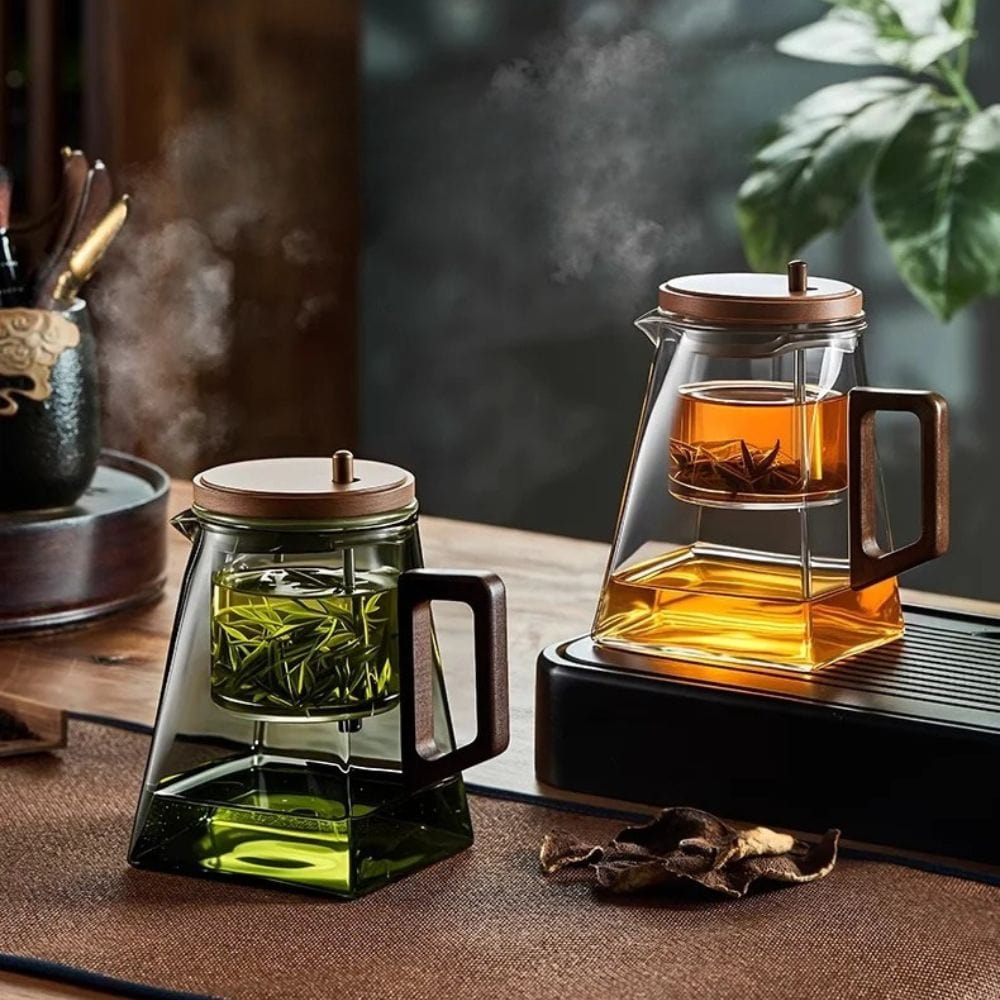
300ml • Removable filter • Perfect floral tea 🌸
📖 Table of Contents
1. What is Jasmine Tea?
Jasmine tea is a tea naturally scented with fresh jasmine flowers, primarily produced in China.
🌸 The Definition
Jasmine tea (Mòlìhuā chá 茉莉花茶 in Chinese) is a scented tea where tea leaves naturally absorb the aroma of jasmine flowers. Traditionally made with green tea, it can also be made with white tea or oolong. It is the most popular scented tea in China and one of the most exported worldwide.
🌸 Floral Aroma
Captivating jasmine fragrance, delicate and romantic.
🍃 100% Natural
Scented with real flowers, no artificial flavors.
😌 Soothing
Jasmine has recognized relaxing properties.
🇨🇳 Tradition
Over 1000 years of history in China.
2. The Art of Manufacturing
Creating quality jasmine tea is a complex artisanal process:
🌺 Jasminum Sambac
The jasmine variety used is crucial:
- Species: Jasminum sambac (Arabian jasmine)
- Origin: Primarily cultivated in Fujian (China)
- Harvest: Buds are picked in the morning, before blooming
- Blooming: Flowers open in the evening and release their fragrance at night
🍃 The Traditional Scenting Process
An art that requires patience and know-how:
- Tea preparation: Green tea is dried and stored until summer (jasmine season)
- Flower harvesting: Buds are picked in the morning, still closed
- Blooming: Wait until evening for the flowers to open and release their fragrance
- Mixing: Fresh flowers are mixed with tea leaves
- Absorption: The tea absorbs the aroma for several hours
- Separation: Withered flowers are removed (or left depending on the style)
- Repetition: The process is repeated 3 to 7 times for premium teas
💡 The Number of "Scentings"
The quality of a jasmine tea is often measured by the number of scentings. A basic tea undergoes 2-3 scentings. A premium tea can undergo 6-7, or even 9 for the most exceptional ones. The more scentings, the deeper and more complex the aroma.
⚠️ Modern vs. Traditional Methods
Be aware of industrial versions:
- Traditional: Natural scenting with fresh flowers (costly, long)
- Industrial: Added jasmine flavors (cheaper, artificial taste)
- How to recognize: Traditional tea has a subtle and complex aroma, industrial tea is often overly scented and one-dimensional
| Quality | Number of Scentings | Characteristics |
|---|---|---|
| Standard | 2-3 | Light aroma, affordable price |
| Premium | 4-5 | Balanced, complex aroma |
| Grand Cru | 6-7+ | Deep, subtle aroma, high price |
3. Varieties of Jasmine Tea
There are several styles of jasmine tea, each with its own peculiarities:
Jasmine Pearls
Leaves rolled into pearls, very aromatic
Dragon Pearl
Premium pearls, green tea + jasmine
White Jasmine
White tea base, very subtle
⚪ Jasmine Pearls (Jasmine Dragon Pearls)
The most famous jasmine tea:
- Form: Leaves rolled into small pearls (hand-rolled for premium)
- Base: Quality green tea (often from Fujian)
- Aroma: Intense, floral, slightly sweet
- Infusion: Pearls slowly unfurl in water
- Reinfusions: Can be infused 3-4 times
Visual spectacle: Watching the pearls open is an experience in itself!
🌟 Jasmine Yin Hao
Premium version with buds:
- Characteristic: Contains silvery buds (hao = down)
- Base: Green tea with tips (young shoots)
- Aroma: More delicate, less intense than pearls
- Taste: Subtle floral notes, sweet finish
🤍 Jasmine White Tea
The alliance of two delicacies:
- Base: White Tea (Bai Mu Dan or Silver Needle)
- Aroma: Very subtle, floral and honeyed
- Advantage: Less caffeine, very mild
- Ideal for: Sensitive palates or in the evening
🫖 Jasmine Oolong
A less common combination:
- Base: Lightly oxidized Oolong
- Aroma: Floral + woody/buttery notes from the oolong
- Complexity: More body than the green tea version

30% off automatically by clicking below
6 pieces • Teapot + cups • Asian style 🇨🇳
4. Health Benefits
Jasmine tea combines the benefits of green tea AND jasmine:
Antioxidants
Protective green tea catechins
Relaxation
Jasmine soothes the nervous system
Digestion
Facilitates digestion after meals
Heart
Good for cardiovascular health
Skin
Antioxidants beneficial for skin
Energy
Mild caffeine + L-theanine
😌 The Relaxing Effect of Jasmine
Jasmine has recognized soothing properties:
- Aromatherapy: The scent of jasmine is used to reduce anxiety
- Studies: Research shows a mild sedative effect
- L-theanine: Green tea contains this relaxing amino acid
- Combination: Caffeine + L-theanine = calm energy, without jitters
Ideal: For a moment of relaxation without drowsiness.
🛡️ Benefits of Green Tea
The base of jasmine tea provides:
- Catechins (EGCG): Powerful antioxidants
- Metabolism: Slight stimulation
- Cardiovascular health: Reduction of LDL cholesterol
- Concentration: Improvement of cognitive functions
See our guide to green tea benefits.
💡 A Natural Anti-Stress Tea
Jasmine tea is perfect for relaxing breaks at work or stressful end-of-days. Its aroma alone has a calming effect. Take the time to breathe deeply over your cup before drinking!
5. How to Prepare It
Careful preparation reveals all the subtlety of jasmine tea:
📋 The Perfect Method
- Dosage: 2-3g of tea (1 teaspoon) per 200ml cup
- Water: Fresh, filtered, heated to 75-85°C (not boiling!)
- Preheat: Rinse the teapot/cup with hot water
- Infusion: 2-3 minutes for the first infusion
- Observe: Watch the pearls unfurl (if applicable)
- Taste: Inhale the aroma before drinking
| Type | Temperature | Time | Reinfusions |
|---|---|---|---|
| Jasmine Pearls | 80-85°C | 2-3 min | 3-4 times |
| Jasmine Yin Hao | 75-80°C | 2-3 min | 2-3 times |
| White Jasmine | 70-75°C | 3-4 min | 2-3 times |
| Standard Jasmine | 80-85°C | 2-3 min | 1-2 times |
⚠️ The Mistake to Avoid
Never use boiling water (100°C)! Green tea and jasmine are delicate. Water that is too hot burns the leaves, making the tea bitter and destroying subtle floral aromas. Let the water cool for 2-3 minutes after boiling.
🧊 Iced Jasmine Tea
Excellent as a cold version:
- Cold brew method: 3 tablespoons in 1L of cold water, 6-8h in the fridge
- Quick method: Brew 2x stronger, pour over ice cubes
- Result: Refreshing, floral, naturally slightly sweet
See our iced tea guide.
💡 Reinfusions
Quality jasmine pearls can be steeped 3 to 4 times. Each infusion reveals different nuances: the first is floral and intense, subsequent ones are milder and more vegetal. Slightly increase the steeping time with each infusion.
6. Tasting and Pairings
Jasmine tea pairs well with many dishes:
🥢 Asian Cuisine
The natural pairing par excellence:
- Dim sum: The traditional Cantonese pairing
- Sushi: The floral balances the fish
- Thai cuisine: Complements complex flavors
- Fried rice: Cleanses the palate between bites
🍰 Desserts
Gourmet pairings:
- Fresh fruits: Peach, lychee, mango
- Light pastries: Macarons, financiers
- White chocolate: Delicate and floral pairing
- Ice cream: Jasmine tea as ice cream = delight
👨🍳 In Cooking
Jasmine tea as an ingredient:
- Jasmine rice: Cook rice in infused jasmine tea
- Syrup: For cocktails or pastries
- Marinade: For chicken or shrimp
- Crème anglaise: Infuse the pearls in the cream
💡 Ideal Time
Morning/Afternoon: Perfect due to its mild caffeine. After meals: Aids digestion. Relaxing break: The aroma soothes. Avoid: Just before bedtime if sensitive to caffeine.

30% off automatically by clicking below
350ml • Elegant glass • Large capacity ✨
7. Frequently Asked Questions
❓ Does jasmine tea contain caffeine?
Yes. As it is generally green tea-based, it contains caffeine (theine): approximately 25-50mg per cup depending on concentration. This is less than coffee but enough for a mild stimulating effect. Avoid in the evening if you are sensitive.
❓ Should jasmine flowers be present in the tea?
Not necessarily. In traditional high-quality jasmine teas, the flowers are often removed after scenting. Their presence is decorative. A tea without visible flowers can be excellent if the scenting has been done well. Conversely, many flowers can mask a mediocre quality tea.
❓ How to recognize good jasmine tea?
Quality indicators: 1) Subtle and complex aroma (not artificially strong). 2) Whole leaves, no dust. 3) Clear, yellow-green infusion color. 4) Balanced taste between tea and jasmine. 5) Ability to re-steep several times.
❓ How to store jasmine tea?
Jasmine tea is more delicate than unscented teas because the aromas evaporate. Store it in an airtight tin, away from light, moisture, and strong odors. Ideally, consume it within 6 months.
❓ Jasmine tea or Earl Grey: which to choose?
Two scented teas, two different worlds! Jasmine tea (green tea base, soft floral notes) is more delicate and Asian. Earl Grey (black tea base, citrusy bergamot) is fuller-bodied and British. It's a matter of personal taste!
Conclusion: Floral Elegance
Jasmine tea is an invitation to poetry. Its enchanting fragrance, the fruit of ancestral savoir-faire, transforms each cup into a moment of grace and serenity.
📝 Key Takeaways
- 🌸 Origin: Green tea naturally scented with jasmine flowers
- 🇨🇳 Tradition: Scenting process repeated 3 to 7 times
- 🌡️ Temperature: 75-85°C (never boiling)
- ⏱️ Infusion: 2-3 minutes
- 🔄 Reinfusions: 3-4 times for quality pearls
- 😌 Benefits: Relaxing + green tea antioxidants
Also discover our guides on green tea, white tea, Earl Grey, and infusion temperature.
Let yourself be captivated by the fragrance of jasmine! 🌸🍵✨
🌸 Discover Our Accessories for Jasmine Tea
Teapots, cups, infusers... Everything to enjoy this delicate tea!
30% off with code BLOG30 • Free shipping
