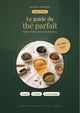

Oolong Tea: The Complete Guide (Origins, Varieties, Gongfu Cha)
Introduction: Oolong Tea, the Art of Balance
Oolong tea (or wulong, 乌龙茶) is often considered the most fascinating of all teas. Neither truly green nor truly black, it explores an infinite territory between these two extremes, offering an aromatic palette of incomparable richness.
Its name literally means "Black Dragon" in Chinese, a reference to the winding shape of the rolled leaves. Between unoxidized green tea and fully oxidized black tea, oolong tea occupies an oxidation spectrum ranging from 15% to 85%, creating an extraordinary diversity of flavors.
Discover everything about oolong tea: its legendary origins, its famous varieties (Tie Guan Yin, Da Hong Pao, Dong Ding...), its health benefits, and the art of preparing it according to the Gongfu method. 🍂🐉

-30% automatic by clicking below
Perfect for oolong • Gongfu Cha 🐉
📖 Table of Contents
- 1. What is Oolong Tea?
- 2. History and Legends of Oolong Tea
- 3. How Oolong Tea is Made
- 4. Major Varieties of Oolong Tea
- 5. Health Benefits of Oolong Tea
- 6. How to Prepare Oolong Tea
- 7. The Gongfu Cha Method
- 8. Which Teapot for Oolong Tea
- 9. Storing Oolong Tea
- 10. Frequently Asked Questions
- Conclusion
1. What is Oolong Tea?
Oolong tea is a semi-oxidized tea, meaning it lies between green tea (0% oxidation) and black tea (100% oxidation). This intermediate position gives it a unique aromatic complexity.
🐉 The Oxidation Spectrum
Oolong tea covers an oxidation range of 15% to 85%. A lightly oxidized oolong (15-30%) will be close to green tea with floral and vegetal notes. A heavily oxidized oolong (60-85%) will be closer to black tea with woody and roasted notes. Between the two, a world of nuances to explore!
🍂 Oolong Tea in the Tea Family
- White tea: 5-10% oxidation
- Green tea: 0% oxidation
- Oolong tea: 15-85% oxidation ← The widest spectrum!
- Black tea: 100% oxidation
- Pu-erh tea: Fermented (different process)
💡 Why "Oolong" or "Wulong"?
The term 乌龙 (Wūlóng) means "Black Dragon" in Chinese. Several legends explain this name: the serpentine shape of the rolled leaves, the dark color of certain varieties, or the name of a legendary tea grower. "Oolong" is the most common English romanization.
2. History and Legends of Oolong Tea
The history of oolong tea is intimately linked to the misty mountains of Fujian and Taiwan, where it was born centuries ago.
📜 The Legend of the Distracted Hunter
According to the most widespread legend, a tea farmer from Fujian named Wu Long was also a hunter. One day, after picking his tea leaves, he spotted a deer and chased it. When he returned the next day, his leaves had begun to oxidize in the sun. Instead of discarding them, he dried them and discovered a new tea with extraordinary flavors.
🇨🇳 The Cradle: Wuyi Mountains, Fujian
The Wuyi Mountains (武夷山) in Fujian province are considered the birthplace of oolong tea. A UNESCO World Heritage site, these mountains offer an exceptional terroir:
- Altitude: 300-700m
- Frequent mists and mild climate
- Rocky soil rich in minerals
- Millennial tradition of tea cultivation
This is where the famous Da Hong Pao and other "rock teas" (Yan Cha) originated.
🇹🇼 Taiwan: Oolong Excellence
In the 19th century, oolong tea was introduced to Taiwan, which became a major producer with its own unique varieties:
- Dong Ding: The most famous Taiwanese oolong
- Ali Shan: High altitude, floral notes
- Oriental Beauty: Unique oolong bitten by insects
- Jin Xuan: Creamy and milky notes
Today, Taiwanese oolongs are among the most prized in the world.
3. How Oolong Tea is Made
The production of oolong tea is the most complex and technical of all teas. It requires precise artisanal expertise.
🔄 The Production Steps
- Plucking: Mature leaves (larger than for green tea)
- Sun-withering: 30-60 minutes to soften the leaves
- Indoor withering: Rest indoors with repeated shaking
- Shaking/Bruising: Mechanical action to break the edges and initiate oxidation
- Controlled oxidation: From a few hours to a day depending on the type
- Fixation: Heating to stop oxidation
- Rolling: Shaping (tight balls or twisted leaves)
- Drying/Roasting: Final drying, sometimes with roasting
🎯 Shaking: The Key Step
Shaking is what distinguishes oolong from other teas. By shaking or bruising the leaves in bamboo baskets, the tea master gently breaks the edges of the leaves, which releases enzymes and allows for partial and controlled oxidation. The intensity and duration of shaking determine the final oxidation level.
🔥 Roasting: An Additional Dimension
Some oolongs undergo roasting after initial drying:
- Light roasting: Preserved floral notes, freshness
- Medium roasting: Nutty, caramel notes
- Heavy roasting: Woody, coffee, chocolate notes
Traditional Wuyi Mountains oolongs (Yan Cha) are generally well roasted, while modern Taiwanese oolongs are often lightly or unroasted.
4. Major Varieties of Oolong Tea
DA HONG PAO
Red Robe • Wuyi
TIE GUAN YIN
Iron Goddess • Anxi
DONG DING
Frozen Summit • Taiwan
ORIENTAL BEAUTY
Bug-bitten • Taiwan
JIN XUAN
Golden Lily • Taiwan
YAN CHA
Rock Teas • Wuyi
| Variety | Origin | Oxidation | Aromatic Profile |
|---|---|---|---|
| Tie Guan Yin (modern) | 🇨🇳 Anxi, Fujian | 15-25% | Floral, orchid, creamy |
| Tie Guan Yin (traditional) | 🇨🇳 Anxi, Fujian | 40-60% | Roasted, honey, woody |
| Da Hong Pao | 🇨🇳 Wuyi, Fujian | 60-80% | Mineral, roasted, dried fruits |
| Shui Xian | 🇨🇳 Wuyi, Fujian | 50-70% | Honey, orchid, woody |
| Dong Ding | 🇹🇼 Nantou | 25-40% | Nutty, floral, buttery |
| Ali Shan | 🇹🇼 Chiayi | 15-25% | Floral, creamy, fresh |
| Jin Xuan (Milk) | 🇹🇼 Various | 15-25% | Milky, creamy, soft |
| Oriental Beauty | 🇹🇼 Hsinchu | 60-80% | Honey, ripe fruit, muscatel |
🏔️ Da Hong Pao: The King of Oolongs
Da Hong Pao (Big Red Robe) is the most famous and expensive oolong tea. Originating from the Wuyi Mountains, the original mother trees are classified as national monuments. Its profile:
- Oxidation: High (60-80%)
- Roasting: Strong
- Flavors: Mineral, dried fruits, caramel, licorice
- Aftertaste: Long and persistent (Yan Yun - "rock rhyme")
🌸 Tie Guan Yin: The Iron Goddess
Tie Guan Yin (Iron Goddess of Mercy) is the most popular oolong in the world. It exists in two styles:
- Modern style (Qing Xiang): Light oxidation, very floral and creamy
- Traditional style (Nong Xiang): Stronger oxidation, roasted, honey notes
The leaves are rolled into tight balls that slowly unfurl during brewing.
🦋 Oriental Beauty: The Bug-Bitten Tea
Oriental Beauty (Dong Fang Mei Ren) is a unique oolong from Taiwan. Its special characteristic: the leaves are bitten by small green leafhoppers (Jacobiasca formosana), which triggers a chemical reaction giving the tea its exceptional honey and muscatel notes.
- Oxidation: Very high (60-80%)
- Appearance: Multicolored leaves (green, brown, white)
- Flavors: Honey, muscat grape, peach, soft wood

-30% automatic by clicking below
Nomadic Gongfu Cha • Complete 🧳
5. Health Benefits of Oolong Tea
Oolong tea combines the benefits of green tea and black tea, with some unique properties related to its production process.
✅ Recognized Benefits
- Metabolism: Studies suggesting an increase in energy expenditure
- Antioxidants: Rich in polyphenols (catechins and theaflavins)
- Cardiovascular health: May help regulate cholesterol
- Blood sugar: May contribute to blood sugar regulation
- Bone health: Studies on bone density
- Concentration: Caffeine + L-theanine for sustained attention
⚖️ Oolong Tea and Weight Management
Oolong tea is often associated with weight management. Several studies suggest it could:
- Slightly increase metabolism (3-10%)
- Promote fat oxidation
- Reduce dietary fat absorption
Caution: These effects are modest and do not replace a balanced diet and physical exercise.
☕ Caffeine: Moderate to High
The caffeine content of oolong tea varies depending on the oxidation level:
- Light oolong: 30-40mg per cup (similar to green tea)
- Medium oolong: 40-50mg per cup
- Dark oolong: 50-70mg per cup (similar to black tea)
6. How to Prepare Oolong Tea
Oolong tea can be prepared simply (Western style) or according to the traditional Gongfu Cha method. Parameters vary depending on the type of oolong.
✅ Western Method (Simple)
- Dosage: 3-5g for 200-300ml of water
- Temperature: 85-95°C depending on the type
- Time: 3-5 minutes
- Infusions: 2-3 possible
| Oolong Type | Temperature | Time | Infusions |
|---|---|---|---|
| Light oolong (Modern Tie Guan Yin, Ali Shan) | 85-90°C | 2-3 min | 4-6 |
| Medium oolong (Dong Ding, Jin Xuan) | 90-95°C | 3-4 min | 4-5 |
| Dark oolong (Da Hong Pao, Oriental Beauty) | 95-100°C | 3-5 min | 5-8 |
| Roasted oolong (Yan Cha, Traditional Tie Guan Yin) | 95-100°C | 3-4 min | 6-10 |
Consult our guides on brewing temperature and brewing time to perfectly master your preparations.
💡 Observe the Leaves
Oolong tea in tight balls (like Tie Guan Yin) needs time to unfurl. The first infusion is often considered a "rinse": pour hot water, wait 10 seconds, discard. This awakens the leaves and improves subsequent infusions.
7. The Gongfu Cha Method
Gongfu Cha (工夫茶, "tea prepared with care") is the traditional Chinese method for brewing oolong tea. It is a true art that reveals the full complexity of the tea.
🎎 Principles of Gongfu Cha
The Gongfu method uses more tea, less water, and multiple short infusions. Instead of a single long infusion, 5 to 15 successive short infusions are made, each revealing new facets of the tea. This is the best way to appreciate a quality oolong.
✅ Gongfu Cha Parameters
- Dosage: 5-8g for 100-150ml (teapot or gaiwan)
- Temperature: 90-100°C depending on the type
- First infusion: 15-20 seconds
- Subsequent infusions: +5-10 seconds each time
- Number of infusions: 6-15 depending on quality
🏺 Gongfu Equipment
- Gaiwan: Lidded cup, versatile, ideal for beginners
- Yixing Teapot: Porous clay that enhances the tea
- Cha Hai (pitcher): For even pouring and serving
- Small cups: 30-50ml for tasting
- Tea tray: To collect water
Discover our guide to Chinese tea sets for more in-depth information.
8. Which Teapot for Oolong Tea
The choice of teapot significantly influences the oolong tea experience. Porous materials like Yixing clay are particularly suitable.
✅ Ideal Teapots for Oolong
- Yixing Clay: Excellence for oolong ⭐⭐⭐⭐⭐
- Porcelain Gaiwan: Versatile, neutral ⭐⭐⭐⭐⭐
- Fine ceramic: Good alternative ⭐⭐⭐⭐
- Porcelain: For light oolongs ⭐⭐⭐⭐
🏺 The Yixing Teapot: The Holy Grail of Oolong
Yixing clay (Zisha) teapots are considered perfect for oolong tea:
- Porosity: The clay absorbs tea oils and enhances infusions
- Thermoregulation: Maintains a stable temperature
- Development: The teapot improves with time
- Golden rule: One Yixing teapot = one type of tea
⚠️ Beware of Yixing
A true Yixing teapot is an investment. Avoid counterfeits (very common). Authentic Yixing clay is porous and unglazed. Never use soap to clean it. Dedicate one teapot to one type of tea.
For more advice, consult our guide How to choose your teapot.

-30% automatic by clicking below
Gaiwan style • Chinese decor 🐉
9. Storing Oolong Tea
Storing oolong tea varies according to its level of oxidation and roasting.
✅ Light Oolongs (Modern Tie Guan Yin, Ali Shan)
- Storage: Refrigerator recommended
- Container: Airtight vacuum-sealed bag
- Duration: 6-12 months for optimal freshness
- Caution: Allow to return to room temperature before opening
🔥 Roasted Oolongs (Da Hong Pao, Traditional Dong Ding)
- Storage: Room temperature
- Container: Opaque airtight box
- Duration: 1-3 years, or even more for some Yan Cha
- Special feature: Can improve with age
Discover our collection of tea boxes for optimal storage.
10. Frequently Asked Questions
❓ Does oolong tea really help with weight loss?
Studies suggest that oolong tea can slightly increase metabolism (3-10%) and promote fat oxidation. However, the effects are modest. Oolong tea can be a useful supplement as part of a healthy lifestyle, but it does not replace a balanced diet and exercise.
❓ What's the difference between Chinese and Taiwanese oolong?
Chinese oolongs (Fujian) are often more roasted with woody and mineral notes (Yan Cha, Da Hong Pao). Taiwanese oolongs are generally less oxidized with floral and creamy notes (Ali Shan, Jin Xuan). Both styles are excellent; it's a matter of preference!
❓ How many times can oolong tea be steeped?
A good oolong tea can be steeped 5 to 15 times using the Gongfu method. Each infusion reveals new nuances. Oolongs in tight balls (Tie Guan Yin) can go up to 7-8 infusions. Heavily roasted Yan Cha can reach 10-15 infusions.
❓ Should oolong tea be "rinsed" before brewing?
It is recommended, especially for oolongs in tight balls. The "rinse" (first infusion discarded after 10-15 seconds) awakens the leaves, helps them unfurl, and removes dust. It's not mandatory but improves subsequent infusions.
❓ Does oolong tea contain caffeine?
Yes, variably. A light oolong contains about 30-40mg of caffeine per cup, while a dark oolong can reach 50-70mg. This is generally between green tea and black tea. Avoid oolong after 5 PM if you are sensitive to caffeine.
Conclusion: Oolong Tea, a World to Explore
Oolong tea is truly the tea of connoisseurs. With its infinite oxidation spectrum, legendary varieties, and ability to reveal new flavors with each infusion, it is an invitation to an endless sensory journey.
📝 Key Takeaways
- 🐉 Semi-oxidized: Between green tea (0%) and black tea (100%)
- 🌡️ Temperature: 85-100°C depending on the type
- ⏱️ Multiple infusions: 5-15 infusions possible with Gongfu
- 🏺 Ideal teapot: Yixing or Gaiwan
- 💎 Star varieties: Da Hong Pao, Tie Guan Yin, Dong Ding
- 📦 Storage: Varies depending on oxidation/roasting
Explore our teapot collection to find the perfect companion for your oolong teas, and discover our tea sets for practicing Gongfu Cha!
Oolong tea: the art of perfect balance. 🍂🐉✨
🐉 Discover Our Teapots for Oolong Tea
Authentic Yixing, porcelain Gaiwan, Gongfu sets... Find the perfect equipment to enhance your oolong teas.
-30% with code BLOG30 • Free delivery