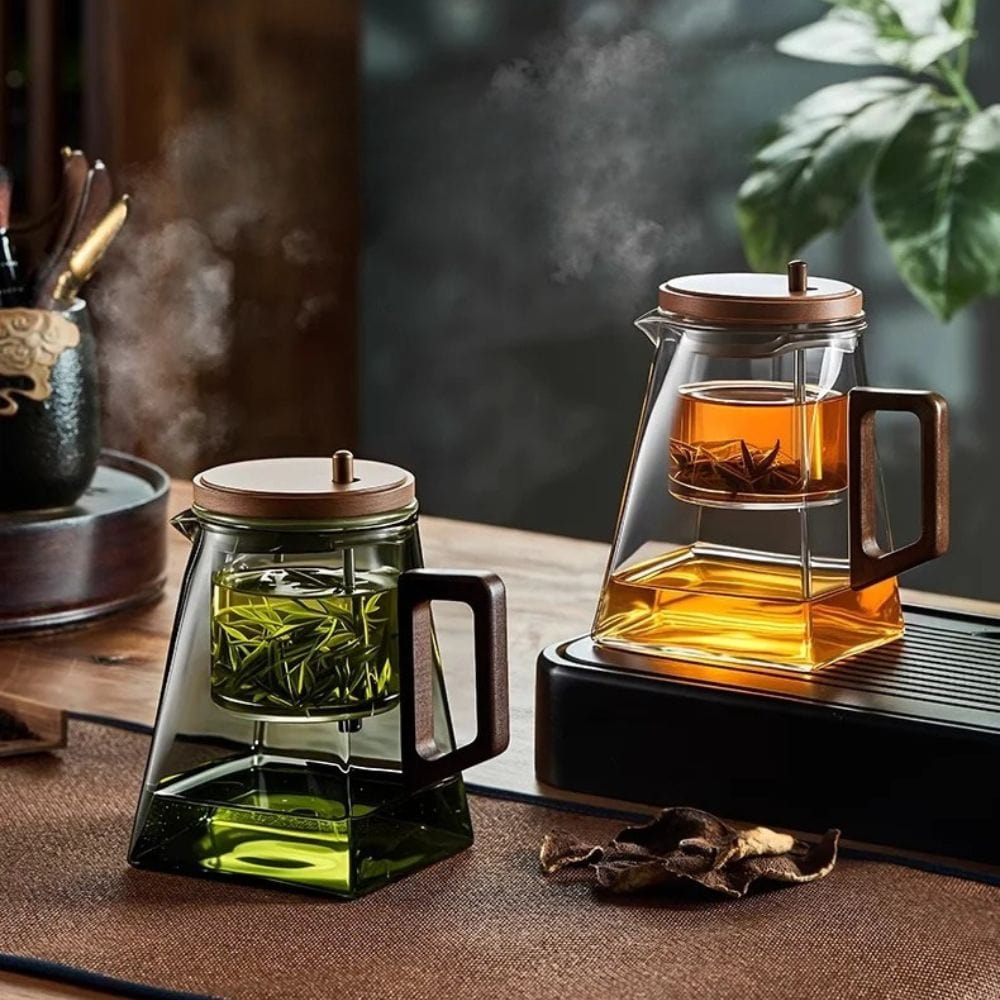


Porcelain Teapot: Complete Guide
Introduction: Porcelain, Nobility and Refinement for Your Tea
The porcelain teapot embodies absolute elegance in the world of tea. Nicknamed "white gold" since its discovery in China over a thousand years ago, porcelain remains today the material of choice for fine tea lovers and traditional ceremonies.
Unlike the cast iron teapot which favors robustness, or ceramic which focuses on artisanal authenticity, porcelain offers incomparable finesse, perfect taste neutrality and a refined aesthetic that enhances every tasting.
In this comprehensive guide, discover why porcelain remains the connoisseur's choice, how to select and care for it. If you're hesitating between several materials, consult our guide on how to choose your teapot. 🤍✨

-30% automatic by clicking below
Integrated filter • Elegant 🤍
📖 Table of Contents
- 1. History of Porcelain: From China to the World
- 2. The Different Types of Porcelain
- 3. Why Choose a Porcelain Teapot?
- 4. Which Teas for Porcelain?
- 5. How to Choose Your Porcelain Teapot
- 6. Styles: English, Chinese, Japanese, Modern
- 7. Care and Maintenance
- 8. Porcelain vs Other Materials
- 9. Frequently Asked Questions
- Conclusion
1. History of Porcelain: From China to the World
Porcelain originated in China under the Han Dynasty (206 BC - 220 AD), but it was during the Tang and Song dynasties that it reached its perfection. The secret of its manufacture was closely guarded for centuries.
🏺 White Gold: A Millenary Secret
Europeans, fascinated by this translucent and delicate material, tried for centuries to unlock its mystery. It was not until 1708 that Johann Friedrich Böttger finally discovered the formula in Meissen (Germany), giving birth to European porcelain.
The Great Origins of Porcelain
CHINA
Jingdezhen, global birthplace
JAPAN
Arita, Imari, Kutani
ENGLAND
Wedgwood, Royal Doulton
GERMANY
Meissen, first in Europe
FRANCE
Limoges, Sèvres
💡 Did you know?
The word "porcelain" comes from the Italian porcellana, the name of a seashell whose smooth and shiny surface resembled this fine ceramic. Marco Polo used this term to describe the wonders he discovered in China.
2. The Different Types of Porcelain
Not all porcelains are identical. Depending on their composition and firing, they offer different properties:
BONE CHINA
50% bone ash
The finest and most translucent
FINE PORCELAIN
Pure kaolin
Radiant whiteness
HARD-PASTE PORCELAIN
Fired at 1400°C
Very resistant
SOFT-PASTE PORCELAIN
Fired at 1200°C
More fragile, very beautiful
🦴 Bone China: The Epitome of Refinement
Invented in England in the 18th century, Bone China contains up to 50% ox bone ash. This unique composition gives it:
- Exceptional translucency: Allows light to pass through
- Ivory whiteness: Warm and elegant hue
- Extreme fineness: Very thin but resistant walls
- Lightness: Lighter than classic porcelain
It is the preferred choice for traditional English tea sets.
🇨🇳 Chinese Hard-Paste Porcelain
The original porcelain, fired at very high temperatures (1300-1400°C). Composed of kaolin (white clay) and petuntse (feldspar), it is:
- Extremely hard: Scratch-resistant
- Non-porous: Does not absorb any flavor
- Sonorous: Produces a crystalline sound when tapped
- Ideal for delicate teas: Perfect neutrality
🎯 How to Recognize Real Porcelain?
Translucency test: Place your hand behind the cup, facing the light. Real porcelain allows the shadow of your fingers to be seen.
Sound test: Gently tap with a hard object. Porcelain produces a clear, sustained sound, unlike ceramic (dull sound).
3. Why Choose a Porcelain Teapot?
Porcelain offers unique advantages that other materials cannot match:
Taste Neutrality
Never alters the taste of tea
Absolute Elegance
Refined and luxurious aesthetic
Easy Maintenance
Smooth surface, simple cleaning
Good Heat Retention
Maintains temperature
Versatile
All types of teas
Lightweight
Lighter than cast iron
🎯 The Major Advantage: Perfect Neutrality
Unlike Yixing clay which "memorizes" aromas (see our guide on Chinese tea sets), porcelain is perfectly neutral. You can brew a Darjeeling in the morning and an Earl Grey in the afternoon without any flavor contamination. It's the ideal material for enthusiasts who enjoy different types of teas.
⚖️ Porcelain vs. Cast Iron: The Duel
Cast iron teapots excel at heat retention, but porcelain wins on:
- Lightness: 3 to 5 times lighter
- Ease of maintenance: No seasoning, no rust
- Versatility: Suitable for all teas without exception
- Aesthetics: More varied and refined designs

-30% automatic by clicking below
Hand-painted • Unique 🎨
4. Which Teas for Porcelain?
Thanks to its neutrality, porcelain is suitable for all teas. However, it particularly excels with certain types:
| Tea Type | Compatibility | Why? |
|---|---|---|
| 🤍 White tea | ⭐⭐⭐⭐⭐ Perfect | Reveals all the delicacy |
| 🍃 Delicate green tea | ⭐⭐⭐⭐⭐ Perfect | Preserves vegetal notes |
| 🌸 Darjeeling | ⭐⭐⭐⭐⭐ Perfect | Sublimes muscatel aromas |
| 🫖 Earl Grey | ⭐⭐⭐⭐⭐ Perfect | Ideal for scented teas |
| 🟤 Black tea | ⭐⭐⭐⭐ Very good | Afternoon tea classic |
| 🟠 Light Oolong | ⭐⭐⭐⭐ Very good | Reveals floral notes |
| ⬛ Pu-erh | ⭐⭐⭐ Good | Possible but Yixing preferred |
🎯 Recommendation
Porcelain is THE material of choice for delicate teas (white, green, Darjeeling) whose subtle nuances you want to appreciate. For more robust teas that benefit from staying hot longer (pu-erh, strong black teas), a cast iron teapot may be preferable.
To master the appropriate infusion temperatures for each tea, consult our dedicated guide.
5. How to Choose Your Porcelain Teapot Well
Here are the essential criteria for making the right choice:
Quality
Translucency, clear sound, careful finish
Capacity
400ml (2p), 600ml (3-4p), 800ml+ (family)
Filter
Integrated porcelain or removable stainless steel
Style
English, Chinese, modern, Japanese
Usage
Robust daily use or special occasions
🔍 Key Points to Check
- Lid: Must fit perfectly, with a vent hole
- Spout: Smooth flow, no drips
- Handle: Comfortable, doesn't get too hot
- Balance: Stable when full
- Finish: No bubbles or irregularities in the glaze
💰 Budget: What to Choose?
• €20-40: Standard porcelain, everyday use
• €40-80: Fine porcelain, better quality
• €80-150: Bone China, artisanal or renowned brands
• €150+: Collector's items, prestigious manufacturers
6. Styles: English, Chinese, Japanese, Modern
Each culture has developed its own style of porcelain teapot:
🇬🇧 English Style - Afternoon Tea
Victorian elegance par excellence. English teapots are characterized by:
- Shape: Round and generous, high handle
- Decorations: Floral (roses), traditional motifs
- Material: Primarily Bone China
- Capacity: Often 600ml-1L
- Brands: Wedgwood, Royal Albert, Royal Doulton
Ideal for black teas (English Breakfast, Earl Grey) and traditional afternoon tea.
🇨🇳 Chinese Style - Gongfu and Gaiwan
Minimalism and functionality for Gongfu service:
- Shape: Small (100-200ml), compact
- Decorations: Traditional blue and white, solid colors
- Specificity: Gaiwan (lidded bowl) very popular
- Usage: Short and repeated infusions
Discover our complete guide to Chinese tea sets.
🇯🇵 Japanese Style - Refined and Zen
Wabi-sabi aesthetic applied to porcelain:
- Shape: Kyusu with a side handle
- Decorations: Minimalist, nature (cherry blossoms)
- Colors: Subtle whites, blues, greens
- Filter: Often integrated ceramic filter
For Japanese tea lovers, consult our Japanese teapot guide.
🌐 Modern Style - Contemporary Design
Porcelain revisited for contemporary interiors:
- Lines: Clean, geometric
- Colors: Pure white, matte black, pastel tones
- Materials: Combinations of porcelain + wood, stainless steel
- Functionality: Removable infusers, ergonomic designs
7. Care and Storage
Porcelain is easier to care for than cast iron, but requires some precautions. For a complete guide, see our article on teapot care.
🧹 Daily Maintenance
- Rinsing: With hot water after each use
- Soap: Permitted (unlike cast iron), but mild
- Drying: Wipe and let air dry with lid open
- Storage: Away from dust, protected from shocks
⚠️ Important Precautions
- Thermal shocks: Avoid pouring boiling water into a cold teapot
- Preheating: Always rinse with warm water first
- Handling: Fine porcelain is fragile!
- Dishwasher: Not recommended for hand-decorated items
- Microwave: Only if marked "microwave safe"
🧽 Removing Tea Stains
Gentle method: Baking soda + warm water, rub gently
Effective method: Diluted white vinegar, let sit for 15 min
Stubborn stains: Denture tablet dissolved in hot water (yes, it works!)
To properly store your teas, consult our guide on tea storage and discover our hermetic tea caddies.

-30% automatic by clicking below
Porcelain • Ceramic • Glass 🫖
8. Porcelain vs. Other Materials
How does porcelain compare to other materials?
| Criterion | Porcelain | Glass | Cast Iron | Ceramic |
|---|---|---|---|---|
| Taste neutrality | ⭐⭐⭐⭐⭐ | ⭐⭐⭐⭐⭐ | ⭐⭐⭐ | ⭐⭐⭐⭐ |
| Heat retention | ⭐⭐⭐ | ⭐⭐ | ⭐⭐⭐⭐⭐ | ⭐⭐⭐⭐ |
| Elegance | ⭐⭐⭐⭐⭐ | ⭐⭐⭐⭐ | ⭐⭐⭐⭐ | ⭐⭐⭐⭐ |
| Robustness | ⭐⭐ | ⭐⭐⭐ | ⭐⭐⭐⭐⭐ | ⭐⭐⭐ |
| Maintenance | ⭐⭐⭐⭐ | ⭐⭐⭐⭐⭐ | ⭐⭐ | ⭐⭐⭐⭐ |
| Weight | Light | Light | Heavy | Medium |
| Ideal for | Delicate teas | Floral teas | Strong teas | All teas |
9. Frequently Asked Questions
❓ What is the difference between porcelain and ceramic?
Porcelain IS a ceramic, but of superior quality. It is fired at a higher temperature (1260-1400°C vs 1000-1150°C), which makes it harder, non-porous, and translucent. Standard ceramic is opaque and slightly porous.
❓ Can a porcelain teapot be microwaved?
It depends. Plain white porcelain generally withstands the microwave. However, gold or metallic decorations are FORBIDDEN (risk of sparks). Always check for "microwave safe" marking underneath.
❓ How do I know if it's real porcelain?
3 simple tests:
1. Translucency: Hold it up to light, you can see the shadow of your hand
2. Sound: A clear, prolonged sound when tapped
3. Weight: Lighter than ceramic for the same volume
❓ Does porcelain retain heat well?
Moderately. It's better than glass but less effective than cast iron or thick ceramic. For teas that are drunk very hot, always preheat the teapot and use a tea cozy.
❓ Why does my porcelain teapot stain?
Tea tannins can create brownish deposits, especially with black teas. This is normal and does not affect the taste. To clean: baking soda or diluted white vinegar. See our teapot care guide.
Conclusion: Porcelain, Excellence in the Service of Tea
The porcelain teapot embodies the perfect alliance between elegance, taste neutrality, and versatility. Whether you are a fan of fine teas or a devotee of traditional English afternoon tea, it will enhance every infusion.
📝 Summary: Porcelain is For You If...
- ✅ You appreciate delicate teas (white, green, Darjeeling)
- ✅ You drink different types of teas (versatility)
- ✅ Aesthetics and elegance are important to you
- ✅ You are looking for an easy-to-maintain material
- ✅ You enjoy traditional tea service
To explore other materials, consult our guides on glass teapots, cast iron teapots, and ceramic teapots.
Discover our collection of teapots, our tea cups, and our complete tea sets to create your perfect ritual.
The art of tea deserves the nobility of porcelain. 🤍✨
🤍 Discover the Elegance of Porcelain
Refined teapots for exceptional moments.
-30% with code BLOG30 • Free shipping
