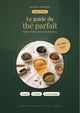

Which Teapot for Green Tea: The Complete Guide
Introduction: Green Tea Deserves a Suitable Teapot
Green tea is the most delicate tea to prepare. Its unoxidized leaves are sensitive to heat and release subtle flavors that can easily turn bitter if conditions are not optimal. The choice of your green tea teapot directly influences the quality of your infusion.
Unlike black teas which are very forgiving, green tea requires special attention: low temperature (60-80°C), short infusion, and a material that does not retain heat for too long. An unsuitable teapot can turn a precious Gyokuro into a bitter and disappointing concoction.
This guide reveals which teapot to choose for your green tea according to the type (Sencha, Matcha, Longjing, Gunpowder...), the ideal materials, and the mistakes to avoid for perfect infusions. 🍃🫖

-30% automatic by clicking below
Integrated stainless steel filter • Perfect for green tea 🍃
📖 Table of Contents
- 1. Why Green Tea Requires a Specific Teapot
- 2. The Best Materials for Green Tea
- 3. Glass Teapots: The Versatile Choice
- 4. Porcelain Teapots: Pure Elegance
- 5. Ceramic Teapots: For Connoisseurs
- 6. Japanese Kyusu: The Green Tea Expert
- 7. Teapots to Avoid for Green Tea
- 8. Which Teapot for Each Type of Green Tea
- 9. Green Tea Brewing Tips
- 10. Frequently Asked Questions
- Conclusion
1. Why Green Tea Requires a Specific Teapot
Green tea stands out from other teas due to its manufacturing process: the leaves are quickly heated after harvesting to stop oxidation. This process preserves the delicate catechins, antioxidants, and vegetal flavors.
🌡️ The Temperature Problem
Green tea should be brewed between 60°C and 80°C. Water that is too hot (as for black tea) burns the leaves and releases bitter tannins. A teapot that retains heat for too long continues to "cook" the leaves even after you've poured the water, resulting in a bitter infusion.
🍃 What a Good Green Tea Teapot Should Offer
- Rapid cooling: Water must reach the right temperature quickly
- Aromatic neutrality: Should not absorb or transfer flavors
- Precise pouring: To control infusion time exactly
- Fine filtration: Green tea leaves are often small
- Small capacity: For fresh and multiple infusions
To master the infusion temperature, a thermometer or a kettle with adjustable temperature are valuable allies.
2. The Best Materials for Green Tea
Not all materials are equally suitable for brewing green tea. Here is a ranking of the best choices:
GLASS
⭐⭐⭐⭐⭐ Ideal
PORCELAIN
⭐⭐⭐⭐⭐ Excellent
FINE CERAMIC
⭐⭐⭐⭐ Very Good
CAST IRON
⭐⭐ To Avoid
| Material | Heat Retention | Neutrality | For Green Tea |
|---|---|---|---|
| Borosilicate glass | Low ✅ | Total ✅ | ⭐⭐⭐⭐⭐ Perfect |
| Fine porcelain | Low ✅ | Excellent ✅ | ⭐⭐⭐⭐⭐ Perfect |
| Glazed ceramic | Medium | Good ✅ | ⭐⭐⭐⭐ Very Good |
| Japanese stoneware | Medium | Good | ⭐⭐⭐⭐ Traditional |
| Terracotta (Yixing) | High | Absorbs ⚠️ | ⭐⭐⭐ Specific |
| Cast Iron | Very High ❌ | Medium | ⭐⭐ Not Recommended |
| Stainless Steel | High ❌ | Good | ⭐⭐ Not Recommended |
💡 The Golden Rule
For green tea, prioritize thin-walled materials that do not retain heat. Glass and porcelain are your best allies. If you use ceramic, choose thin-walled models rather than thick, rustic pieces.
3. Glass Teapots: The Versatile Choice
The glass teapot is often considered the ideal choice for green tea, and for good reason.
🔮 Advantages of Glass for Green Tea
- Total neutrality: Does not absorb any aroma, does not transmit any
- Rapid cooling: Thin wall = stable temperature
- Visibility: Observe the leaves unfurl and the color of the infusion
- Easy to clean: No residues or lingering odors
- Versatility: Ideal for all types of green tea
✅ Borosilicate Glass: The Must-Have
Opt for borosilicate glass rather than ordinary glass:
- Resistant to thermal shock
- Lighter and thinner
- Does not crack with hot water
- Superior lifespan
💡 The Glass Gaiwan Tip
For an authentic Chinese green tea experience, try a glass gaiwan. This lidded bowl allows for short and precise infusions, ideal for quality green teas like Longjing or Biluochun.
Discover our selection of glass teapots perfect for green tea.

-30% automatic discount by clicking below
Built-in filter • Ideal for green tea ✨
4. The Porcelain Teapot: Pure Elegance
The porcelain teapot is the traditional Chinese choice for green tea. Its thin walls and non-porous surface make it an excellent choice.
🤍 Advantages of Porcelain
- Fineness: Very thin walls, optimal cooling
- Neutrality: Non-porous glazed surface
- Aesthetics: Highlights the jade color of green tea
- Tradition: Used for centuries in China
- Easy care: Cleans effortlessly
✅ White vs. Decorated Porcelain
For green tea, prefer plain white porcelain:
- Allows you to appreciate the true color of the infusion
- Guarantees the absence of substances in pigments
- Clean style that honors the tea
Decorated porcelains are also suitable, but ensure that the decorations are underglaze (not in contact with the tea).
💡 The Porcelain Gaiwan
The porcelain gaiwan (lidded bowl) is the ultimate traditional tool for tasting fine Chinese green teas. It allows precise control of each infusion and appreciation of the leaves' evolution.
Learn more about the porcelain teapot.
5. The Ceramic Teapot: For Connoisseurs
Ceramic is a broad term that encompasses several types of materials. For green tea, some ceramics are more suitable than others.
✅ Ceramics Suitable for Green Tea
- Fine glazed ceramic: Thin wall, smooth surface
- Japanese stoneware (Tokoname): Japanese green tea tradition
- Korean Celadon: Delicate glazing, beautiful aesthetics
⚠️ Ceramics to Use with Caution
- Yixing (purple clay): Absorbs aromas – dedicate it to a single green tea
- Thick stoneware: Retains too much heat
- Unglazed terracotta: High porosity
⚠️ The Special Case of Yixing
Yixing teapots made of Duanni clay (yellow) are traditionally used for certain Chinese green teas. However, their porosity means they must be dedicated exclusively to that tea. A Yixing that has been used for Pu-erh is not suitable for green tea!
6. The Japanese Kyusu: The Green Tea Expert
The Kyusu (急須) is the traditional Japanese teapot, specially designed for Japanese green teas such as Sencha, Gyokuro, or Bancha.
🇯🇵 Why the Kyusu is Perfect for Green Tea
The Kyusu has a side handle that allows for precise and quick pouring, essential for Japanese green teas that require very short infusions (30-60 seconds). Its integrated ceramic filter retains fine particles while allowing flavors to pass through.
🫖 Kyusu Characteristics
- Side handle: One-handed pouring, quick and precise
- Integrated filter: Generally ceramic, sometimes stainless steel
- Small capacity: 150-300ml for fresh infusions
- Materials: Tokoname stoneware, porcelain, or ceramic
- Wide spout: Smooth and complete pouring
💡 Tokoname: The Reference Stoneware
Tokoname stoneware Kyusu are the most renowned. This iron-rich clay slightly softens the astringency of green tea and reveals its umami notes. A quality Kyusu is an investment for life!
Discover our complete guide to the Japanese teapot.
7. Teapots to Avoid for Green Tea
Some teapots, excellent for other types of tea, are not recommended for green tea.
❌ The Cast Iron Teapot
Cast iron retains a lot of heat. Even with water at 70°C, the thermal mass of the cast iron continues to heat the water and leaves, leading to a bitter over-infusion. Reserve your cast iron teapot for black teas and roasted oolongs.
❌ The Stainless Steel Teapot
Stainless steel is a heat conductor. It heats up quickly and cools slowly, which is not suitable for the precise control required by green tea. Additionally, some detect a slight metallic taste with delicate teas.
⚠️ Thick-Walled Teapots
Regardless of the material, avoid thick-walled teapots for green tea. The thickness acts as a heat reservoir that continues to "cook" your tea. Prefer thin and lightweight models.
| Teapot | Problem for Green Tea | Alternative |
|---|---|---|
| Cast Iron | Overheating, over-infusion | Glass or porcelain |
| Stainless Steel | Conductivity, metallic taste | Borosilicate glass |
| Thick stoneware | Excessive heat retention | Fine ceramic or Kyusu |
| Non-dedicated Yixing | Flavor mixing | Dedicated Duanni Yixing |

-30% automatic discount by clicking below
Handmade glazed • Kyusu style 🍵
8. Which Teapot for Which Type of Green Tea
Not all green teas are the same. Here are our recommendations based on the main families:
🇯🇵 Japanese Green Teas (Sencha, Gyokuro, Bancha)
- Ideal: Tokoname stoneware or porcelain Kyusu
- Alternative: Glass or fine porcelain teapot
- Temperature: 60-70°C (Gyokuro) to 80°C (Bancha)
- Capacity: 150-300ml
🇨🇳 Chinese Green Teas (Longjing, Biluochun, Mao Feng)
- Ideal: Porcelain or glass Gaiwan
- Alternative: Borosilicate glass teapot
- Temperature: 75-85°C
- Capacity: 100-200ml
🌍 Gunpowder & Robust Green Teas
- Ideal: Glass or porcelain teapot
- Alternative: Glazed ceramic
- Temperature: 80-85°C (more tolerant)
- Capacity: 300-500ml
🍵 Matcha (Powdered Green Tea)
- Attention: Matcha is not infused in a teapot!
- Method: Whisked with a chasen in a bowl (chawan)
- Temperature: 70-80°C
- Accessories: Bowl, bamboo whisk, measuring spoon
| Type of Green Tea | Recommended Teapot | Temperature | Infusion Time |
|---|---|---|---|
| Gyokuro | Small Kyusu | 50-60°C | 90-120s |
| Sencha | Kyusu or glass | 70-80°C | 60-90s |
| Longjing | Gaiwan or glass | 75-80°C | 60-90s |
| Biluochun | Glass or porcelain | 70-75°C | 45-60s |
| Gunpowder | Glass or ceramic | 80-85°C | 2-3 min |
| Bancha | Kyusu or glass | 80-90°C | 30-60s |
9. Green Tea Infusion Tips
Even with the perfect teapot, a few golden rules guarantee a successful infusion:
🌡️ Master the Temperature
- Never pour boiling water directly onto green tea
- Let the water cool after boiling (3-5 minutes to reach 70-80°C)
- Or pour boiling water into a pitcher, then into the teapot
- A thermometer remains the most accurate
⏱️ Respect Infusion Time
- Delicate teas (Gyokuro): 90-120 seconds
- Sencha, Longjing: 60-90 seconds
- Gunpowder: 2-3 minutes maximum
- General rule: Better too short than too long!
💡 The Trick of Multiple Infusions
Good green teas can be infused 3 to 5 times. Slightly increase the time with each infusion (+15-30s). The second and third infusions are often the best, revealing more complex notes.
⚠️ The Most Common Mistake
Leaving the leaves soaking in the water between infusions. Always completely empty your teapot after each serving. Leaves left in hot water continue to release bitter tannins.
For more details, consult our guides on infusion time and infusion temperature.
10. Frequently Asked Questions
❓ Can I use my cast iron teapot for green tea?
It is not recommended. Cast iron retains too much heat and risks over-infusing your green tea, making it bitter. If you have no other option, preheat the cast iron with cold water and use water at a maximum of 60°C. But investing in a glass teapot will be much more satisfying for your green teas.
❓ What size teapot for green tea?
Opt for small capacities: 150-300ml. Green tea is enjoyed in small quantities, with several successive infusions. A large 1L teapot will cool down before it's finished, and the tea will lose its freshness. To serve several people, make several infusions rather than one large one.
❓ Should I preheat the teapot for green tea?
No, it's the opposite! Unlike black tea, you generally don't preheat the teapot for green tea. The goal is to maintain a low temperature. You can even pour lukewarm water (30-40°C) to slightly warm a cold teapot, but no more.
❓ Glass or porcelain: which to choose?
Both are excellent! Glass offers the visual advantage of seeing the leaves unfurl. Porcelain is more traditional and slightly more insulating. To start, glass is often recommended because it allows you to visualize the color and better control the infusion.
❓ Can I use the same teapot for different green teas?
Yes, absolutely! If your teapot is made of glass, porcelain, or glazed ceramic, it does not absorb aromas. You can switch between Sencha, Longjing, and other green teas without any problem. Simply rinse with hot water between each use.
Conclusion: The Ideal Teapot for Your Green Tea
Choosing the right teapot for green tea is essential to reveal the full subtlety of this delicate tea. Remember these key principles:
📝 Summary
- ✅ Borosilicate glass: The versatile and ideal choice for beginners
- ✅ Fine porcelain: Traditional and elegant
- ✅ Japanese Kyusu: Perfect for Sencha and Gyokuro
- ✅ Gaiwan: Ideal for quality Chinese green teas
- ⚠️ Fine ceramic: Acceptable if thin-walled
- ❌ Cast iron and stainless steel: To be avoided for green tea
Investing in a good teapot adapted to green tea will transform your tasting experience. The vegetal flavors, umami notes, and natural sweetness of green tea can only fully express themselves under optimal conditions.
Ready to choose your teapot? Consult our guide How to choose your teapot and explore our teapot collection!
Green tea deserves the best. Give it the teapot it deserves! 🍃🫖✨
🍃 Discover Our Teapots for Green Tea
Glass, porcelain, Japanese ceramic... Perfect models to enhance your green tea.
-30% with code BLOG30 • Free shipping